Comment évaluer la qualité de la découpe au laser à fibre à partir d’échantillons réellement découpés
Blog
Conseils pratiques sur la technologie laser, le choix des équipements et la transformation des métaux.
Comment évaluer la qualité de la découpe au laser à fibre à partir d’échantillons réellement découpés
November 24, 2026
When investing in a fiber laser cutting machine, metal fabricators often focus on laser power, cutting speed, and production capacity. However, high-speed cutting is only valuable when the machine can maintain the required cutting quality and stability.
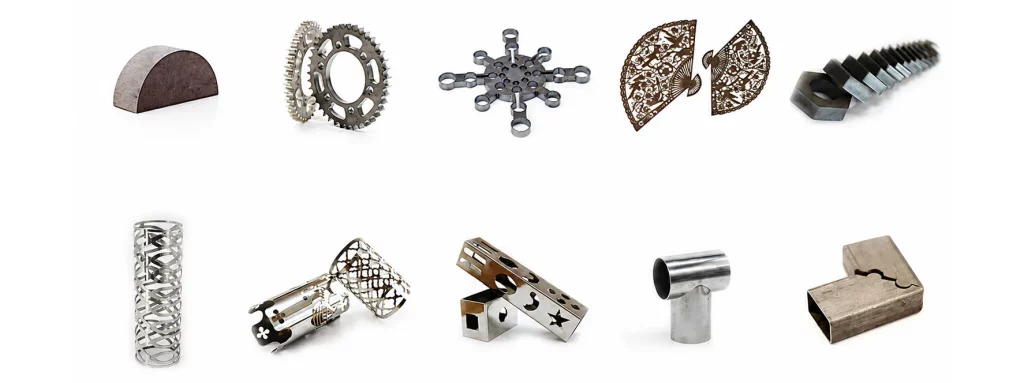
Actual cut samples provide a practical reference for evaluating machine performance. By examining cutting edges, complex contours, and dimensional consistency, buyers can better understand whether a fiber laser cutting machine meets their production requirements.
At HAISINN, Active Vibration Suppression Technology is designed to address mechanical resonance and micro-vibrations during high-speed fiber laser cutting, supporting smoother cuts, stable machine motion, and efficient metal fabrication.
What Defines Good Fiber Laser Cutting Quality?
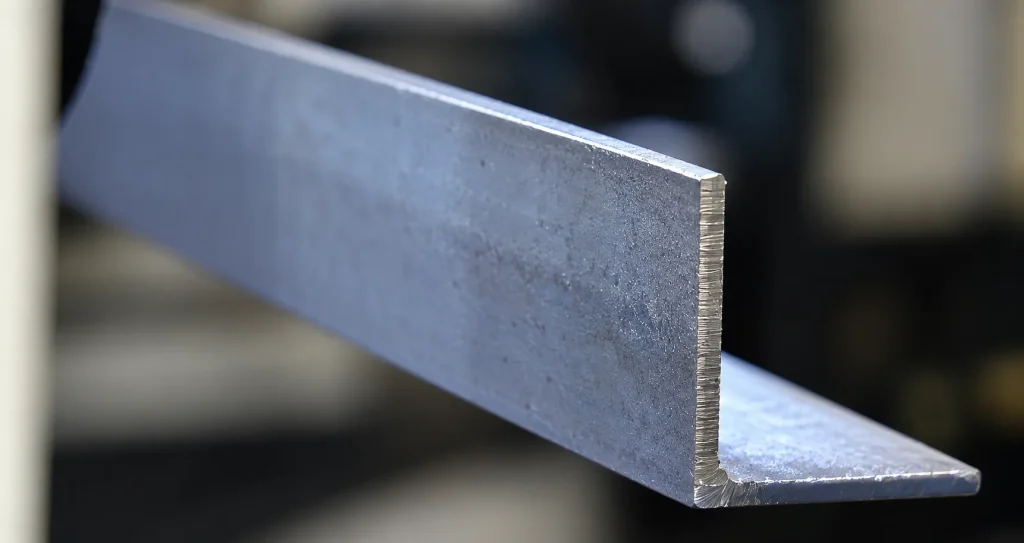
Fiber laser cutting quality should be evaluated through the finished workpiece rather than machine speed alone. Smooth cutting edges, well-defined contours, and consistent processing results are important considerations when assessing equipment performance.
The following indicators provide a practical reference for buyers evaluating laser cut samples.
Quality Indicator
What Buyers Should Examine
Cutting Edge Smoothness
Surface texture and visible edge irregularities
Corner Quality
Cutting quality around sharp corners
Contour Accuracy
Consistency of curves and complex profiles
Dimensional Accuracy
Finished dimensions against the original drawing
Burrs and Dross
Residual material attached to the cutting edge
Cutting Consistency
Quality variation between repeated samples
These indicators should be evaluated according to the material, thickness, workpiece geometry, and specific production requirements.
How Do Mechanical Resonance and Micro-Vibrations Affect Cutting Quality?
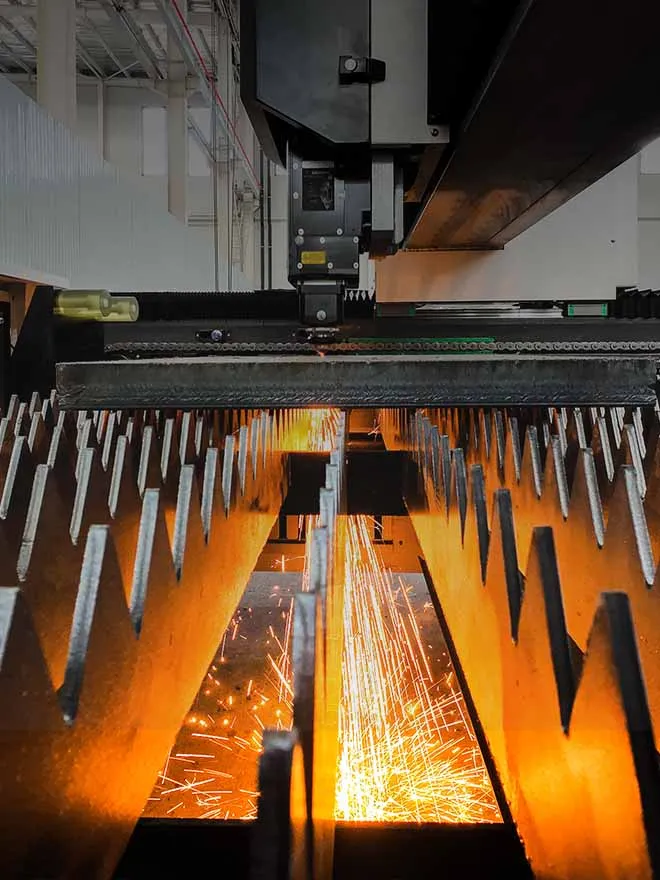
During high-speed fiber laser cutting, the cutting head may undergo rapid acceleration, deceleration, and frequent directional changes.
When processing sharp corners and intricate contours, mechanical resonance and micro-vibrations can interfere with stable cutting head movement and affect the quality of the finished workpiece.
These effects are particularly relevant when manufacturers seek to combine high processing speeds with consistent cutting quality.
For equipment buyers, evaluating dynamic stability is therefore an important part of understanding actual machine performance. A high maximum speed alone does not establish how effectively a machine will process complex workpieces.
HAISINN Active Vibration Suppression Technology
To address the challenges associated with high-speed cutting, HAISINN integrates Active Vibration Suppression Technology into its fiber laser cutting equipment.
The technology is designed to reduce unwanted vibration and support stable cutting head movement during demanding processing operations.
Its key objectives include:
Reducing the effects of mechanical resonance and micro-vibrations.
Supporting stable cutting head movement at high speeds.
Improving cutting edge smoothness and contour quality.
Supporting consistent cutting performance.
Helping manufacturers achieve efficient production throughput.
By focusing on both cutting speed and dynamic stability, HAISINN aims to support manufacturers seeking a balance between finished-part quality and production efficiency.
Vibration Suppression ON vs. OFF: See the Difference in Action
HAISINN’s side-by-side demonstration compares fiber laser cutting operations with Active Vibration Suppression Technology enabled and disabled.
The comparison provides a visual reference for understanding how vibration suppression influences machine motion during high-speed cutting.
Comparison Condition
Evaluation Focus
Réduction des vibrations : désactivée
Observe unwanted vibration during cutting head movement
Réduction des vibrations activée
Observe cutting head stability with the function enabled
Finished Workpiece
Examine visible differences in cutting edges and contours
The demonstration highlights the importance of motion stability when processing complex cutting paths and making rapid directional changes.
Watch the HAISINN Cutting Comparison
The video provides a visual demonstration of vibration suppression in operation. Buyers requiring specific dimensional tolerances or production performance data should evaluate representative samples under defined processing conditions.
When comparing fiber laser cutting machines, buyers should examine representative samples that reflect their actual manufacturing requirements.
Inspect Cutting Edge Smoothness
Examine the cut surfaces for visible irregularities, excessive burrs, and inconsistent edge texture. Where surface finish is critical, appropriate measurement methods should be used.
Examine Corners and Complex Contours
Inspect sharp corners, curves, holes, and intricate profiles. These features provide useful references when evaluating cutting quality during frequent directional changes.
Check Dimensional Accuracy
Compare the finished workpiece with the original engineering drawing. Visual appearance alone cannot establish whether the part meets its specified dimensional tolerances.
Evaluate Cutting Consistency
Where batch production is required, compare multiple samples produced under comparable conditions. This helps assess whether the cutting process can consistently meet the required quality criteria.
These inspection methods can help buyers evaluate equipment suitability based on actual workpieces rather than relying exclusively on published machine specifications.
Why Cutting Stability Matters for Production Throughput
Higher cutting speeds do not necessarily translate into higher effective production output.
If finished parts require additional grinding, deburring, correction, or rework, the time saved during cutting may be offset by subsequent processing operations.
Stable cutting performance can help manufacturers pursue smoother cuts and more consistent workpiece quality while maintaining efficient production workflows.
This is the practical value of combining high-speed fiber laser cutting with vibration suppression: supporting production efficiency without overlooking finished-part quality.
Actual throughput improvements depend on the machine configuration, material, cutting parameters, workpiece geometry, and production conditions.
Evaluate HAISINN Fiber Laser Cutting Machines
Selecting a fiber laser cutting machine requires a comprehensive assessment of cutting speed, motion stability, finished-part quality, and production requirements.
HAISINN’s Active Vibration Suppression Technology demonstrates the company’s focus on addressing the challenges of high-speed metal fabrication through improved cutting stability.
Looking for a fiber laser cutting machine that meets your cutting quality and production requirements?
Contacter HAISINN with your material specifications, part drawings, and production requirements to discuss suitable laser cutting solutions.
FAQ
How can buyers assess fiber laser cutting quality?
Buyers should inspect actual cut samples for edge smoothness, burrs, contour quality, dimensional accuracy, and cutting consistency. The results should be evaluated against specific manufacturing requirements.
Why does vibration suppression matter in high-speed laser cutting?
Rapid acceleration and directional changes can introduce mechanical resonance and micro-vibrations. Vibration suppression is designed to reduce these effects and support more stable cutting head movement.
Does higher cutting speed always mean higher production efficiency?
No. Effective production efficiency also depends on finished-part quality, processing consistency, and the amount of secondary processing or rework required.
Can vibration suppression improve laser cutting edge quality?
Vibration suppression can support smoother cutting by reducing unwanted machine vibration. Actual cutting edge quality also depends on material characteristics, cutting parameters, and other processing conditions.
Nous vous répondrons dans les 24 heures. En cas d'urgence, veuillez nous contacter via WhatsApp ou WeChat : +86-19546137663,. Ou appelez au +86-19546137663 directement.
*Nous respectons la confidentialité de vos données et toutes les informations sont protégées.
Nous n'utiliserons vos informations que pour répondre à votre demande et ne vous enverrons jamais d'e-mails non sollicités ni de messages promotionnels.
















 November 24, 2026