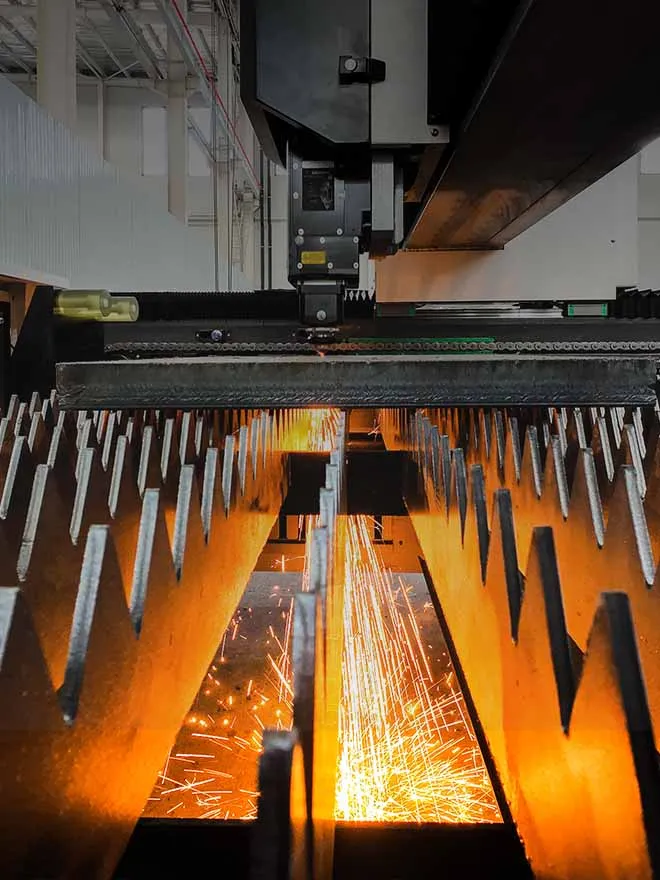
Laser welding machine prices vary because laser power, welding method (handheld or fixed workstation), automation level, and core components each shift the bill of materials. HAISINN’s DW Series workstation is quoted per configuration rather than sold from a published price list, so the number depends on what’s specified.

Why Won’t Manufacturers Just List a Price?
A laser welding workstation isn’t sold as one fixed SKU the way a handheld drill is. The laser source, welding head, cooling system, safety enclosure, and any fixturing or robotic integration are selected around the job — material, joint geometry, weld length, and daily part volume all change which components go into the build. That’s why a search for “laser welding machine cost” rarely turns up a usable number: the machine described in a $12,000 listing and the machine described in a $60,000 listing may share a category name and nothing else in the bill of materials.
Some publicly available buying guides do publish wattage-tier price ranges — for example, handheld systems listed at roughly $3,600 to $16,800 depending on power. That pattern doesn’t map cleanly onto fixed workstation equipment like the DW Series, where the frame, motion system, and enclosure add cost independent of laser power. Two buyers requesting the same nominal power tier can end up with meaningfully different quotes once automation and fixturing scope enter the picture.
Four Variables That Move the Number
| Cost Variable |
What It Affects |
Where HAISINN Confirms |
| Laser power tier |
Laser source cost, cooling capacity, and duty cycle |
DW Series is offered at 1,500 W, 2,000 W, and 3,000 W |
| Fixed vs. handheld build |
Frame, motion axes, and enclosure vs. a portable torch and cable |
DW Series is a fixed, workstation-based configuration—not handheld |
| Automation and fixturing |
Robot integration, part-handling jigs, and cycle-time tooling |
Not standardized; scoped according to the workpiece during quotation |
| Core component selection |
Chiller, controller, and safety interlocks |
Configuration-dependent and confirmed in the formal quotation |
The power tier is the easiest variable to compare on paper, but it isn’t the biggest swing factor on its own. A 1,500 W DW Series unit built with custom fixturing and part-handling automation can cost more than a 3,000 W unit ordered as a standalone workstation with manual loading. Power sets a baseline; automation and fixturing usually move the total further.
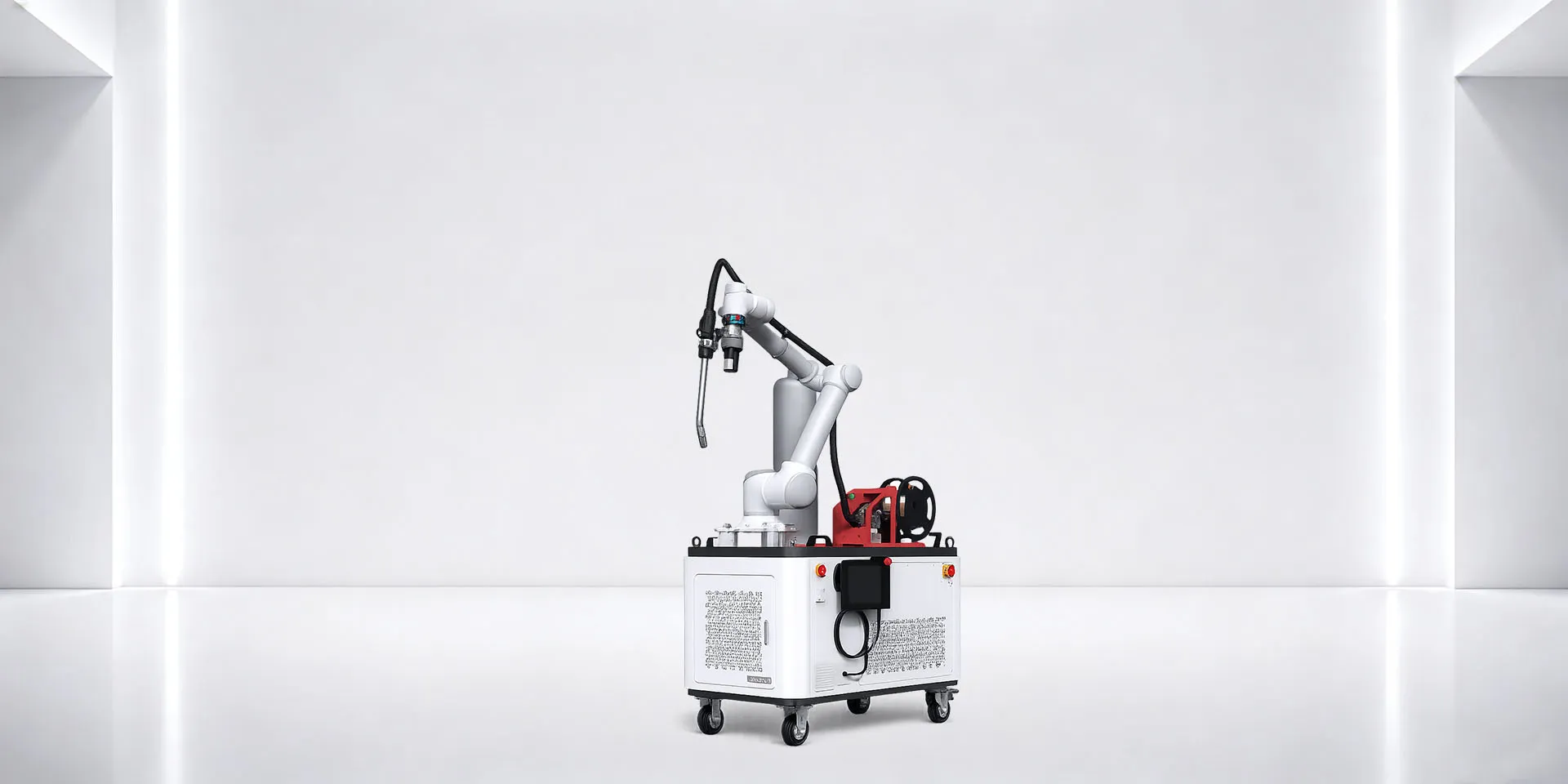
DW Series Workstation: What’s Actually Configurable
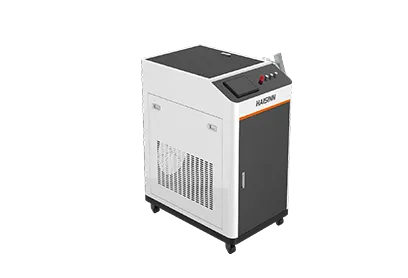
The DW Series is positioned as a fixed or workstation-based laser welding setup, distinct from HAISINN’s handheld welding lines. Published configuration options are limited to laser power at this stage:
| Especificaciones |
Published Value |
| Laser power options |
1,500 W / 2,000 W / 3,000 W |
| Build type |
Fixed / workstation-based |
| Working envelope, fixturing options, cooling method |
To be confirmed at quotation—not published in the current model table |
That gap matters for anyone trying to budget from the product page alone. The published range tells you which power tier fits your material and joint type, but footprint, chiller sizing, and fixturing aren’t standardized numbers you can look up — they’re set once your part drawings and volume requirements are known.
Before You Request a Quote
A quotation moves faster, and lands closer to your real number, when these are decided going in:
- Confirm the base material and thickness range you’re welding.
- Decide whether a fixed workstation (DW Series) or a handheld unit fits your production layout.
- Estimate the laser power tier your weld length and material thickness call for.
- Note whether robotic loading, jigs, or part-handling automation are needed now or planned later.
- Identify your destination market, since service scope and certification documentation can differ by region.
- Ask for an itemized quotation rather than a single lump figure, so you can see which line items are driving cost.
Preguntas frecuentes
Does HAISINN publish a price list for the DW Series?
No. Pricing is configuration-dependent and prepared through a formal quotation based on laser power, working requirements, materials, automation level, core components, destination market, and service scope.
Is a 3,000 W DW Series unit always more expensive than a 1,500 W unit?
Not necessarily. Power tier is one input among several — automation and fixturing scope can outweigh the power difference in the final quote.
Can I compare laser welding machine prices across suppliers using wattage alone?
Wattage is a starting filter, not a full comparison. Build type (fixed vs. handheld), automation, and core components all affect the total, so two machines at the same wattage aren't necessarily priced the same.
What information speeds up getting an accurate quote?
Material and thickness, weld length or joint type, expected volume, and whether part-handling automation is required.












 15 de septiembre de 2026