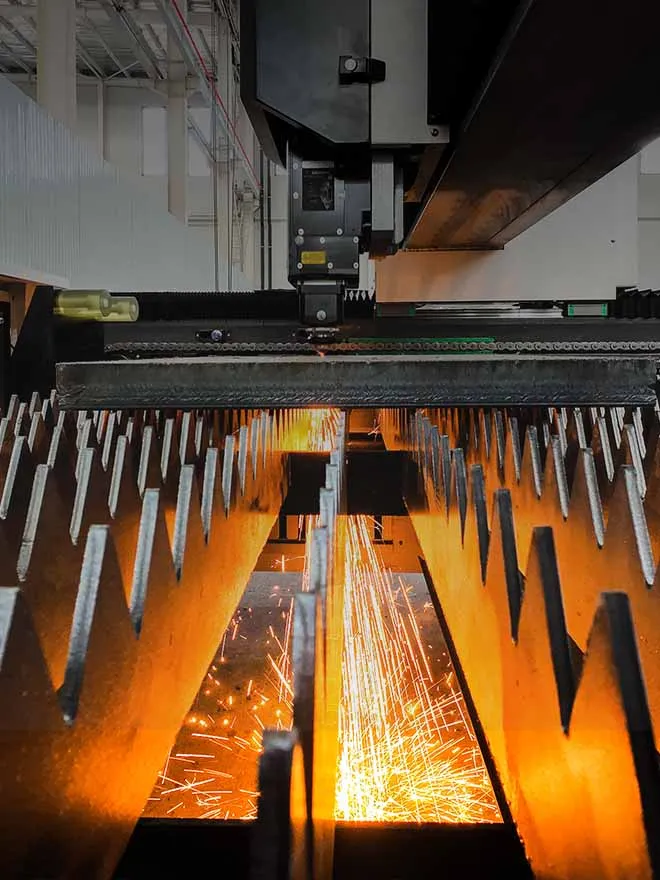
Choisir un machine de découpe au laser fondé uniquement sur la puissance du laser ou le prix d’achat peut entraîner une inadéquation coûteuse entre l’équipement et la production réelle de l’usine.
Un atelier de sous-traitance qui traite des commandes variées de tôles fines et moyennes n’a pas les mêmes besoins qu’un fabricant de structures qui découpe de grandes plaques. Une usine qui produit à la fois des pièces en tôle et des tubes peut nécessiter une autre machine encore. La surface de travail, le type de matériau, la répartition des épaisseurs, le volume de production, la fréquence de chargement, l’espace disponible dans l’usine, les besoins en automatisation et la capacité future influencent tous le choix de la configuration.
Une machine de découpe laser à fibre doit être choisie en fonction des matériaux que vous traitez, de la plage d’épaisseurs habituelle, des dimensions des tôles, du volume de production, de la structure de machine requise, du niveau d’automatisation, de l’agencement de l’usine et du plan d’investissement. Une puissance laser plus élevée ou une zone de travail plus grande n’est pas nécessairement préférable. La meilleure machine est celle qui correspond à votre flux de production réel.

Qu'est-ce qu'une machine de découpe au laser à fibre optique ?
Une machine de découpe laser à fibre est un système industriel à commande numérique (CNC) qui utilise un faisceau laser à fibre focalisé pour découper des pièces métalliques adaptées selon des trajectoires programmées.
Pour le traitement de la tôle, le système associe généralement plusieurs éléments principaux :
- Source laser à fibre
- Tête de découpe laser
- Système de commande CNC
- Bâti de la machine
- Portique et système de déplacement
- Système d'asservissement
- Table de travail
- Système de refroidissement
- Système de gaz d’assistance
- Extraction des poussières et des fumées
- Système de sécurité
- Équipement de manutention des matériaux en option
Le contrôleur CNC coordonne les mouvements tandis que la tête de découpe laser suit la géométrie programmée.
Cela permet à une Machine de découpe laser à commande numérique pour réaliser différents contours, trous, fentes, ouvertures, panneaux, supports, pièces structurelles et composants fabriqués, sans nécessiter un outil de découpe mécanique dédié à chaque forme.
Pour les acheteurs industriels, toutefois, la question importante n’est pas simplement :
Qu’est-ce qu’une machine de découpe laser à fibre ?
La question la plus pertinente est la suivante :
Quelle configuration de machine de découpe laser à fibre convient à ma production ?
Pour cela, il faut comprendre les pièces à usiner avant de comparer les machines.

Quels matériaux une machine de découpe laser à fibre peut-elle découper ?
A machine de découpe au laser pour le métal est couramment choisie pour la transformation industrielle de tôles.
La gamme actuelle de machines pour tôles de HAISINN couvre notamment les applications suivantes :
- Acier au carbone
- Acier inoxydable
- Aluminium
- Fabrication générale de pièces en tôle
La capacité de découpe exacte dépend de la configuration de la machine choisie.
Acier au carbone
L’acier au carbone est largement utilisé dans :
- Fabrication de machines
- Composants structurels
- Machines agricoles
- Équipements de construction
- Fabrication générale
- Châssis industriels
Lors du choix d’une machine de découpe laser de l’acier, les acheteurs doivent tenir compte non seulement de l’épaisseur maximale de l’acier, mais aussi des épaisseurs les plus courantes dans leur production quotidienne.
Une usine qui découpe occasionnellement une pièce en acier épais, mais travaille habituellement des matériaux beaucoup plus fins, n’a pas nécessairement besoin de la même configuration de machine qu’un atelier de fabrication de structures métalliques lourdes.
Acier inoxydable
L’acier inoxydable est couramment utilisé pour :
- Équipements industriels
- Armoires électriques
- Caissons
- Équipements de transformation alimentaire
- Composants fabriqués
- Produits métalliques
La qualité de bord requise, l’épaisseur du matériau, le volume de production et le procédé en aval doivent être pris en compte lors de la configuration de la machine.
Aluminium
La technologie laser à fibre peut également être utilisée pour certaines applications adaptées à l’aluminium.
Les acheteurs doivent vérifier :
- Nuance d’aluminium
- Plage d'épaisseurs
- Géométrie des pièces
- Qualité des arêtes requise
- Volume de production
La compatibilité des matériaux doit toujours être évaluée en fonction de la configuration proposée, et non d’un tableau de découpe générique repris d’une autre machine.
De quel type de machine de découpe laser avez-vous besoin ?
L’expression « machine de découpe laser des métaux » désigne plusieurs types d’équipements aux structures très différentes.
Choisir la bonne configuration peut être tout aussi important que choisir la puissance du laser.
| Type de machine |
Direction principale de la production |
Éléments à prendre en compte par l’acheteur |
| Machine de découpe laser à table unique |
Traitement standard des tôles |
Fréquence de chargement, budget et rythme de production |
| Machine de découpe laser à table alternante |
Production de tôles en grandes séries |
Interruptions liées au chargement et au déchargement |
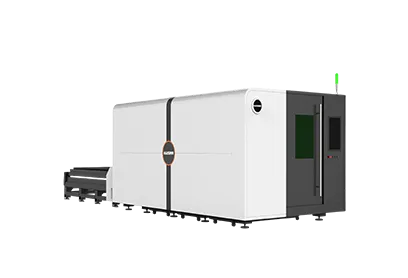
| Machine de découpe laser entièrement fermée |
Environnement de traitement fermé |
Exigences en matière de sécurité et d’atelier |
| Machine de découpe laser grand format |
Tôles surdimensionnées et plaques longues |
Espace au sol et manutention des matériaux |
| Machine de découpe laser alimentée par bobine |
Traitement en continu des bobines |
Production répétitive et automatisation |
| Machine de découpe laser de tubes |
Tubes et profilés |
Dimensions et longueur des tubes, mandrin et chargement |
| Machine de découpe laser pour tôles et tubes |
Découpe combinée de tôles et de tubes |
Diversité de la production et capacité simultanée |
La gamme de produits HAISINN comprend ces différentes solutions plutôt que de s’appuyer sur une seule machine de découpe laser universelle pour répondre à tous les besoins de fabrication.

Machines à plateforme unique
Une machine à table unique offre une configuration simple pour le traitement des tôles.
Elle peut convenir lorsque le volume de production, la fréquence de chargement et le flux de travail ne justifient pas un système de changement de matériau plus complexe.
Machines à table interchangeable
Une table alternante permet d’utiliser une plateforme pour la découpe tandis qu’une autre sert au chargement ou au déchargement, selon le cycle de fonctionnement de la machine.
Cette configuration devient particulièrement pertinente lorsque les manipulations répétées des matériaux risqueraient autrement d’interrompre l’utilisation de la machine.
Machines entièrement fermées
Une structure entièrement fermée peut être envisagée lorsque les acheteurs accordent davantage d’importance au confinement du procédé et à l’organisation de l’atelier.
Cependant, les acheteurs doivent confirmer la configuration exacte de l’enceinte, du système d’extraction, des dispositifs de verrouillage et des équipements de sécurité de la machine proposée.
Machines grand format
A machine de découpe laser grand format est destinée aux acheteurs qui travaillent avec des plaques surdimensionnées ou de longues tôles métalliques.
L’avantage réside dans l’adaptation de la zone de travail aux dimensions réelles des matériaux.
L’achat d’une machine grand format sans besoin de production correspondant peut augmenter :
- Investissement dans l’équipement
- Emprise au sol dans l’usine
- Exigences de manutention des matériaux
- Complexité du chargement
Quelle puissance laser choisir ?
La puissance du laser est l’une des caractéristiques les plus visibles d’une machine de découpe au laser à fibre optique, mais elle ne doit pas être choisie isolément.
Une puissance plus élevée peut étendre les capacités de découpe ou améliorer la productivité dans les applications appropriées, mais le choix de la puissance dépend de plusieurs facteurs.
Type de matériau
L’acier au carbone, l’acier inoxydable, l’aluminium et les autres métaux ne réagissent pas de la même manière lors de la découpe.
Répartition des épaisseurs
Ne vous fiez pas uniquement à l’épaisseur maximale.
Préparez une répartition de la production, par exemple :
- Épaisseurs fréquemment travaillées
- Épaisseurs travaillées à une fréquence moyenne
- Épaisseur maximale requise ponctuellement
Cela donne au fabricant une base plus réaliste pour choisir son équipement.
Volume de production
Une usine traitant des lots occasionnels n’a pas les mêmes exigences qu’un site de production fonctionnant en plusieurs équipes.
Qualité de coupe requise
L’état de bord requis et les procédés en aval peuvent influencer la configuration de procédé privilégiée.
Investissement et coûts d’exploitation
Une puissance laser plus élevée peut avoir une incidence qui va au-delà du devis initial de la machine.
Les acheteurs doivent également prendre en compte l’ensemble du système de production et les exigences d’exploitation.
La bonne question n’est donc pas :
Quelle est la puissance laser maximale que je peux me permettre ?
C'est :
Quelle puissance laser offre le meilleur équilibre entre ma charge de travail habituelle, la productivité requise, les conditions d’exploitation et l’investissement ?
Quelle zone de travail un atelier de fabrication doit-il choisir ?
La zone de travail détermine les dimensions maximales des tôles pouvant être traitées sur la machine.
Mais son incidence va bien au-delà.
Une machine industrielle de découpe laser du métal de plus grande taille peut nécessiter :
- Plus de surface au sol
- Zones de chargement plus grandes
- Plus d’espace de déchargement
- Des équipements de levage différents
- Stockage différent des matériaux
- Une planification plus poussée de l’atelier
Avant de choisir la zone de travail, vérifiez les dimensions réelles des tôles achetées par votre usine.
Demandez :
- Quelles sont les dimensions de tôle les plus courantes que nous utilisons ?
- Quel est le format maximal des tôles habituellement traitées ?
- Usinons-nous régulièrement des tôles hors format ?
- Peut-on optimiser l’imbrication des pièces dans des tôles de format standard ?
- Comment les tôles seront-elles chargées ?
- Comment les pièces finies seront-elles évacuées ?
- Y a-t-il suffisamment d’espace autour de la machine ?
Une zone de travail plus grande n’apporte de valeur que si l’usine peut en tirer parti.
Plateforme simple ou table navette : laquelle choisir ?
Aucune des deux structures n’est systématiquement meilleure que l’autre.
Le bon choix dépend du volume de production et du flux de manutention des matériaux.
Plateforme unique
Une machine de découpe laser à plateau unique peut être intéressante lorsque :
- La fréquence de chargement est modérée
- Les lots de production sont flexibles
- L’espace disponible dans l’atelier est limité
- Un flux de matériaux plus simple est privilégié
- L’investissement doit rester axé sur les capacités de découpe essentielles
Table d’échange
Une machine de découpe laser à table navette devient plus pertinente lorsque :
- Le volume de production est plus élevé
- Les tôles sont fréquemment changées
- Le chargement interrompt la découpe
- Le taux d’utilisation de la machine est important
- Les opérateurs attendent régulièrement que la zone de découpe se libère
La décision doit reposer sur le temps que l’usine consacre à la manutention des matériaux entre les cycles de découpe.
N’achetez pas une table navette simplement parce qu’elle semble plus avancée.
Si le programme de production ne tire pas parti des capacités supplémentaires offertes par ce mode de travail, l’investissement risque de ne pas apporter de valeur significative à la production.
Faut-il choisir la découpe de tôles, de tubes ou combinée tôles-tubes ?
De nombreuses usines recherchent une machine de découpe laser CNC sans distinguer au préalable le type de pièce à usiner.
Cela représente un risque majeur dans le choix de l’équipement.
Machine de découpe laser de tôles
Choisissez une machine de découpe laser de tôles lorsque la charge de production concerne principalement des tôles métalliques planes.

Les critères habituels sont notamment les suivants :
- Dimensions des tôles
- Type de matériau
- Plage d'épaisseurs
- Zone de travail
- Méthode de chargement
- Volume de production
Machine de découpe laser de tubes
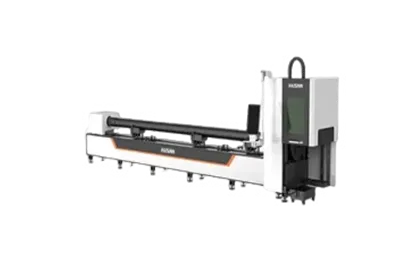
A machine de découpe laser de tubes est spécifiquement conçue pour les matériaux tubulaires.
Le traitement des tubes nécessite de prendre en compte des facteurs qui ne s’appliquent pas à la découpe classique de tôles planes :
- Diamètre du tube
- Longueur du tube
- Profilé tubulaire
- Poids du tube
- Configuration du mandrin
- Support de tube
- Rotation
- Chute de matière
- Chargement automatique
Les différentes orientations de machines de découpe de tubes HAISINN comprennent des systèmes économiques, pour petits diamètres, entièrement carénés, pour travaux intensifs et à chargement automatique.

A petite machine de découpe laser de tubes, par exemple, ne doit être sélectionnée que lorsque les dimensions réelles des tubes correspondent aux spécifications de ce produit.
Machine de découpe laser pour tôles et tubes
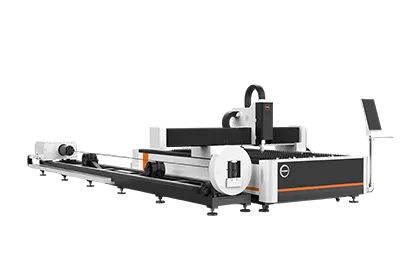
Une machine combinée peut être envisagée lorsqu’une usine travaille réellement à la fois des tôles planes et des tubes.
Avant l’achat, posez-vous les questions suivantes :
- Quel pourcentage de la production concerne les tôles ?
- Quel pourcentage de la production concerne les tubes ?
- Les travaux sur tôles et sur tubes doivent-ils être exécutés simultanément ?
- À quelle fréquence la production change-t-elle ?
- Est-il important d’optimiser l’utilisation de la surface au sol ?
- Deux machines dédiées offriraient-elles une meilleure capacité de production ?
Un système combiné n’est pas automatiquement préférable à des équipements séparés.
Le volume de production et le flux de travail doivent guider ce choix.
Quand faut-il envisager le chargement automatique ?
L’automatisation devient pertinente lorsque la manutention des matériaux commence à limiter le taux d’utilisation de la machine.
Une usine devrait envisager un chargement automatique ou semi-automatique lorsque :
- Les volumes de production sont élevés
- Le chargement des matériaux est fréquent
- Le travail est organisé en plusieurs équipes
- Les tôles sont difficiles à manutentionner manuellement
- La disponibilité des opérateurs est limitée
- Le stockage des matériaux peut être organisé autour de la machine
- Une croissance future de la production est prévue
L’automatisation doit résoudre un problème mesurable du flux de production.
N’ajoutez pas de chargement automatique uniquement pour rendre les caractéristiques de la machine plus impressionnantes.
Avant de choisir une solution d’automatisation, cartographiez l’ensemble du flux de matériaux :
Stockage des matières premières → chargement → découpe → déchargement → tri → processus suivant
Si la découpe est déjà rapide, mais que les opérateurs ne peuvent pas charger efficacement les matériaux, l’automatisation peut créer de la valeur.
Si la machine ne fonctionne qu’occasionnellement, le même investissement peut ne pas être justifié.
Quels sont les avantages de la découpe laser ?
Le avantages de la découpe laser doivent être évalués dans le contexte du processus de production plutôt que comme de simples arguments marketing génériques.
Pour les applications industrielles appropriées de traitement des métaux, les avantages potentiels sont notamment les suivants :
Flexibilité géométrique
Le système CNC peut suivre différents parcours de découpe programmés sans nécessiter un outil de coupe mécanique dédié à chaque forme de pièce.
Production numérique
Les plans des pièces peuvent être préparés et gérés au moyen de processus de programmation CNC et d’imbrication.
Production mixte
Un atelier de fabrication peut traiter différentes géométries de pièces et commandes clients sur une même machine adaptée.
Potentiel d’intégration
La découpe laser peut s’intégrer dans un processus de production plus large comprenant :
- Chargement des matériaux
- Découpe
- Pliage
- Soudage
- Nettoyage
- Assemblage
- Potentiel d’automatisation
Les usines qui produisent en plus grandes quantités peuvent, lorsque c’est pertinent, associer la découpe à des systèmes de manutention des matériaux.
Cependant, ces avantages ne signifient pas que la découpe laser soit automatiquement la meilleure méthode pour tous les matériaux, toutes les épaisseurs, toutes les géométries ou tous les volumes de production.
Le procédé doit néanmoins être évalué au regard des besoins réels de fabrication.
Comment comparer les fabricants de machines de découpe laser ?
Les acheteurs recherchant fabricants de machines de découpe laser de tôle ou machine de découpe laser en Chine constatent souvent que des machines aux descriptions similaires présentent des configurations très différentes.
Une comparaison utile des fabricants doit aller au-delà du prix.
Gamme de produits
Vérifiez si le fournisseur propose des équipements adaptés à différents besoins de production.
Le système de produits actuel de HAISINN comprend :
- Découpe de tôles sur table simple
- Découpe de tôles avec table d’échange
- Découpe en enceinte entièrement fermée
- Découpe grand format
- Découpe à partir de bobines
- Découpe de tubes
- Découpe de tôles et de tubes
- Chargement automatisé
Une large gamme de produits ne rend pas automatiquement un fournisseur meilleur qu’un autre, mais elle offre aux acheteurs davantage de configurations à comparer.
Conclusion
Choisir la bonne machine machine de découpe au laser à fibre optique nécessite de comparer davantage que la puissance et le prix.
Les facteurs les plus importants sont vos matériau, répartition des épaisseurs, dimensions des tôles, volume de production, structure de la machine, méthode de chargement, exigences d’automatisation, agencement de l’usine et plans de production futurs.
Une machine plus grande, plus puissante ou davantage automatisée ne constitue pas automatiquement le meilleur investissement.
Si vous comparez différentes configurations de machines de découpe laser, communiquez à HAISINN le type de matériau, la plage d’épaisseurs, les dimensions des tôles, des plans représentatifs, le volume de production et les exigences en matière d’automatisation. Ces informations nous permettront de déterminer la structure de machine la plus adaptée avant de préparer un devis.
FAQ
Quelle est la meilleure machine de découpe laser pour métaux ?
Il n’existe pas une machine universellement meilleure pour chaque usine. La machine de découpe laser à fibre idéale pour le métal dépend du type de matériau, de la répartition des épaisseurs, des dimensions de tôle, du volume de production, de la structure de machine requise, des besoins en automatisation, de l’agencement de l’usine et de l’investissement.
Une découpeuse laser à fibre est-elle adaptée à la tôle ?
Oui. Une machine de découpe laser à fibre est largement utilisée pour les applications industrielles adaptées à la tôle métallique, notamment l’acier au carbone, l’acier inoxydable et l’aluminium. La capacité exacte dépend de la configuration de la machine.
Quelle est la différence entre une machine de découpe laser à fibre et une découpeuse laser à tubes ?
Une machine de découpe laser à fibre pour tôles traite les matériaux plats sur une table de coupe. Une découpeuse laser à tubes doit en outre serrer, faire pivoter, avancer et soutenir les pièces tubulaires, tout en coordonnant ses mouvements avec la tête de coupe.
Quelle est l'épaisseur maximale qu'une machine de découpe au laser à fibre peut découper ?
Il n’existe pas de tableau universel des épaisseurs de découpe laser applicable à toutes les machines. La capacité dépend du type de matériau, de la puissance laser, de la source laser, de la tête de coupe, du gaz d’assistance, des paramètres de procédé et de la qualité de coupe requise. Les acheteurs doivent demander des données vérifiées pour la configuration exacte proposée.
Une puissance laser plus élevée est-elle toujours préférable ?
Non. Une puissance plus élevée peut élargir la capacité de traitement ou améliorer la productivité dans les applications appropriées, mais elle peut aussi augmenter l’investissement et les exigences de production. La puissance doit correspondre à la répartition des matériaux et des épaisseurs que l’usine traite réellement.
Combien coûte une machine de découpe laser ?
Le prix final dépend de la puissance laser, de la zone de travail, de la structure de la machine, de la source laser, de la tête de découpe, du système CNC, du système de servocommande, du capot de protection, de la table d’échange, de l’automatisation, des équipements en option, de la destination d’expédition et du périmètre du projet.
Dois-je choisir une machine de découpe laser pour tôle ou une machine mixte ?
Si la production est principalement constituée de tôles planes, une machine de découpe laser dédiée à la tôle peut être plus appropriée. Si l’usine traite régulièrement à la fois des tôles et des tubes, un système combiné peut être envisagé. La décision doit être fondée sur la charge de travail et la capacité requise.
Devrais-je acheter une petite machine de découpe laser pour métaux ?
Uniquement lorsque la zone de travail et la capacité de production correspondent réellement à vos pièces habituelles. Une machine plus petite peut réduire l'encombrement ou l'investissement superflu, mais elle ne doit pas limiter le format de tôle habituellement traité par l'usine ni ses besoins de production futurs.














 14 août 2026