The Importance of Fiber Lasers
Redefining Metal Fabrication Efficiency
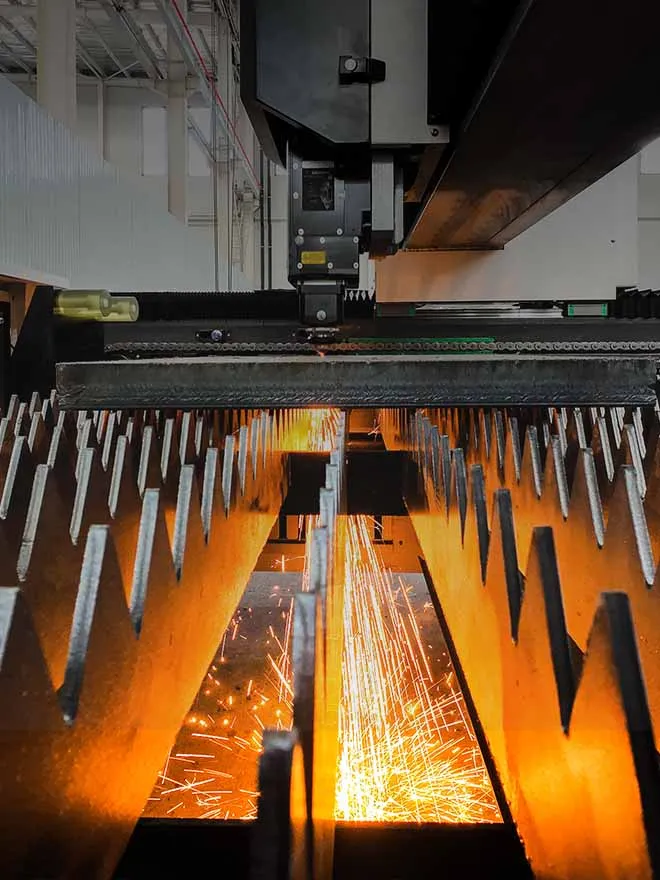
In today’s era of in-depth development of intelligent manufacturing, full-power fiber laser cutting machines have become core equipment in the metal processing field. From precision cutting of thin materials to efficient sizing of thick plates, from conventional metal processing to high-end component manufacturing, their stable, efficient, and precise performance is always underpinned by the fundamental scientific research support of the fiber laser beam transmission mechanism. Beam transmission, as the “energy bridge” connecting the laser source and the workpiece, directly determines the processing limit, energy consumption level, and industrial adaptability of full-power cutting equipment through its transmission efficiency, stability, and precision. It is also the core scientific research barrier distinguishing high-end equipment from ordinary equipment.

Significant breakthroughs and core advantages in full-power scenarios
The core advantage of full-power cutting equipment is that it covers the low, medium and high power range and can adapt to the metal processing needs of different thicknesses and materials. However, this also poses a great scientific research challenge to beam transmission. Traditional solid fiber is prone to problems such as beam quality degradation, aggravated nonlinear effects and excessive energy loss when transmitting at high power, which seriously limits the processing performance and stability of the equipment.
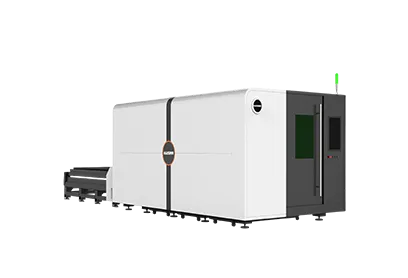
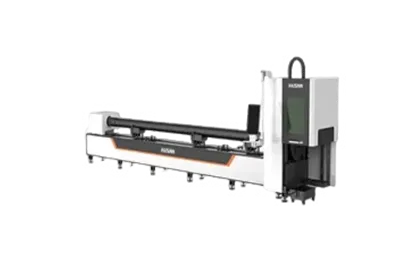
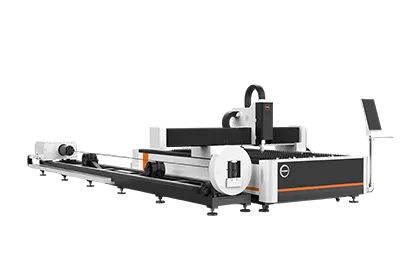
Breakthroughs in the research of fiber laser beam propagation mechanisms must ultimately be applied to the practical use of full-power cutting equipment, transforming it into the core competitiveness of the equipment. This is also the core goal of our in-depth research at the grassroots level. Whether it’s a full-power fiber laser cutting machine, a laser exchange platform, or a laser roller table, their core performance is deeply tied to the beam propagation mechanism, forming a differentiated technological advantage.
Building core competitiveness for full-power laser equipment through fundamental scientific research
The fiber laser beam propagation mechanism, seemingly an abstract scientific theory, is actually the “lifeblood” of full-power cutting equipment, the core underlying logic that determines the equipment’s performance, adaptability, and industrial value. From the structural design of optical fibers to the application of the total internal reflection principle, from solving the high-power transmission problem to the implementation of industrial applications, every scientific breakthrough stems from our in-depth research into laser technology and our profound understanding of the high-quality development needs of the manufacturing industry.
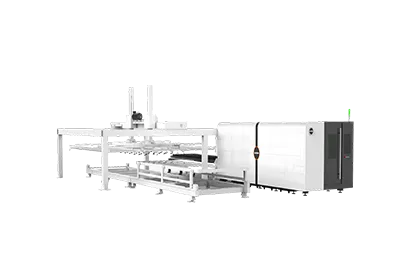
In the future, we will continue to combine the application scenarios of our full range of products, including full-power fiber laser cutting machines, laser exchange platforms, and laser roller tables, to break through technical bottlenecks, optimize transmission efficiency and stability, drive product upgrades with fundamental scientific research and innovation, provide the manufacturing industry with more efficient, precise, and green laser processing solutions, and write a new chapter in intelligent industrial manufacturing in the new era.

FAQ
What is fiber laser beam propagation?
Fiber laser beam propagation is the process of transmitting laser energy from the laser source to the workpiece through an optical fiber and a complete optical path. Its efficiency and stability directly affect laser cutting performance.
How does a fiber transmit laser energy?
The fiber uses its internal structure and the principle of total internal reflection to guide laser energy along the optical path with low transmission loss.
Why is beam propagation important in fiber laser cutting?
Beam propagation acts as the energy bridge between the laser source and the workpiece. Its transmission efficiency, stability and precision influence cutting capacity, energy consumption and suitability for different industrial applications.
What challenges occur during high-power laser transmission?
According to the article, traditional solid fibers can experience beam-quality degradation, stronger nonlinear effects and excessive energy loss under high-power conditions. These problems can reduce equipment stability and processing performance.
How can fiber laser beam transmission be improved?
The article identifies fiber-structure optimization, beam coupling and flying optical-path technology as important approaches for reducing transmission loss and maintaining stable beam delivery across different power ranges.












 July 27, 2026