Buying a fiber laser cutting machine involves more than comparing laser power and purchase prices. For metal fabrication businesses, the right investment must match actual production requirements, available workshop conditions, and long-term operating plans.
However, many buyers contact equipment suppliers without preparing sufficient technical information. This can result in quotations based on different assumptions, making it difficult to compare machines, configurations, and overall project costs.
A structured purchasing checklist helps factories communicate their requirements clearly and evaluate supplier proposals on a consistent basis.
Quick Answer: Before requesting a fiber laser cutting machine quotation, prepare your material types, normal and maximum thicknesses, workpiece dimensions, representative drawings, production volume, and workshop conditions. You should also define your budget, installation requirements, sample-testing expectations, and purchasing schedule. These details help manufacturers evaluate suitable configurations and provide more relevant quotations.
1. What Information Should You Prepare Before Buying a Fiber Laser Cutting Machine?
The first step is to document your actual production requirements.
Instead of requesting a quotation based only on laser power, provide information about the materials and components your factory processes.
| Required Information |
What Buyers Should Provide |
| Main Materials |
Carbon steel, stainless steel, aluminum, or other metals used in production |
| Normal Thickness Range |
The material thicknesses processed most frequently |
| Maximum Thickness |
The thickest material included in the purchasing requirements |
| Workpiece Dimensions |
Standard and maximum sheet or tube dimensions |
| Product Drawings |
Representative CAD files, part drawings, or sample photographs |
| Production Volume |
Normal and peak production requirements |
| Cutting Quality |
Relevant dimensional tolerances and finished-part requirements |
| Future Expansion |
Confirmed plans involving new products, materials, or production capacity |
Why Should You Separate Normal and Maximum Material Thickness?
The thickest material your factory occasionally processes may represent only a small proportion of its total workload.
Identifying both normal and maximum thickness requirements helps the supplier evaluate a configuration against everyday production while checking its suitability for less frequent tasks.
Higher laser power is not automatically the most economical purchasing choice.
Should You Send CAD Drawings?
Representative drawings are highly recommended.
They provide information about part geometry, holes, slots, critical dimensions, and cutting complexity that cannot be communicated through material thickness alone.
If drawings contain confidential information, discuss appropriate sharing arrangements with the supplier before submission.
2. How Do You Analyze Your Factory’s Actual Production Workload?
A machine quotation should reflect how the equipment will be used in daily production.
Before requesting a quotation, review recent production records and identify the workpieces and processes that represent your normal manufacturing activities.
Production Workload Assessment
| Production Item |
Information to Collect |
Why It Matters |
| Main Product Types |
Finished products and representative components |
Helps define the intended application |
| Most Common Materials |
Material grades and types regularly purchased |
Supports material and cutting-process evaluation |
| Typical Thickness Range |
Thickness distribution across normal orders |
Helps evaluate the proposed cutting configuration |
| Average Production Volume |
Recorded daily, weekly, or monthly output |
Establishes normal capacity requirements |
| Peak Production Requirements |
Highest recurring workload during busy periods |
Helps assess capacity constraints |
| Typical Batch Size |
Average quantity per production order |
Indicates the frequency of setup and material changes |
| Product Variation |
Frequency of changing drawings and workpiece types |
Helps assess workflow flexibility |
| Expected Future Changes |
Confirmed new products or expansion plans |
Supports longer-term equipment planning |
The figures should come from the buyer’s actual production records rather than estimates supplied by a machine manufacturer.
This assessment helps avoid purchasing equipment that is unnecessarily large or insufficient for the intended workload.
3. Where Is the Biggest Bottleneck in Your Current Production Process?
Before investing in a new machine, identify which operation currently limits production output.
The main bottleneck may not be cutting speed.
It could involve material preparation, loading, unloading, sorting, or transferring finished parts to the next manufacturing stage.
A simplified production-cycle calculation is:
Total Cycle Time = Preparation Time + Loading Time + Cutting Time + Unloading Time + Other Required Process Time
Use actual production observations to determine which operation consumes the most time.
For example, when loading and unloading repeatedly interrupt production, material-handling arrangements may deserve attention alongside cutting capacity.
If cutting itself accounts for most of the production cycle, the proposed cutting configuration should be evaluated more closely.
The purpose is to improve the complete workflow rather than optimize a single advertised specification.
4. What Workshop Conditions Should You Confirm Before Ordering?
Factory preparation should begin before equipment shipment.
Installation requirements vary according to machine dimensions, configuration, supporting systems, and local workshop conditions.
Workshop Preparation Checklist
| Area |
What Buyers Should Confirm |
| Available Space |
Machine footprint, loading area, operator access, and maintenance clearance |
| Electrical Supply |
Voltage, frequency, capacity, and connection requirements |
| Assist Gas |
Required gas types, supply arrangements, pressure, and quality requirements |
| Cooling |
Requirements for the cooling equipment supplied with the selected configuration |
| Fume Extraction |
Suitable extraction and ventilation arrangements |
| Floor Conditions |
Equipment placement and manufacturer-specified foundation requirements |
| Unloading Access |
Vehicle access, entrance dimensions, and lifting equipment |
| Material Flow |
Raw material storage, loading, unloading, and finished-part movement |
| Operating Environment |
Environmental conditions specified for the selected machine |
Buyers should request model-specific installation information rather than relying on a generic checklist.
Workshop planning must account for the complete operating area, not just the machine’s external dimensions.
If your factory has restricted access, limited floor space, or unusual electrical conditions, communicate these constraints during the quotation stage.
5. How Should You Estimate the Total Project Budget?
The machine purchase price represents only part of the overall investment.
A realistic purchasing budget should include the expenses required to deliver, install, operate, and maintain the equipment.
Main Cost Categories
| Cost Category |
What to Include |
| Equipment Purchase |
Base machine and confirmed technical configuration |
| Optional Equipment |
Additional accessories or automation included in the project |
| Transportation |
Freight, insurance, and applicable logistics expenses |
| Import and Delivery |
Duties, taxes, customs, and local delivery where applicable |
| Installation |
Unloading, positioning, site preparation, and agreed installation expenses |
| Operation |
Electricity, assist gas, and other operating resources |
| Consumables |
Applicable replacement consumables |
| Maintenance |
Routine servicing and replacement-part requirements |
| Training |
Any training expenses outside the agreed supply scope |
6.What Equipment Can HAISINN Evaluate for Your Project?
Jinan Haisinn Technology Co., Ltd., established in 2009, manufactures industrial metal processing equipment, including fiber laser cutting machines and related automation solutions.
Its publicly listed laser cutting product range includes the following equipment directions:
| Processing Requirement |
HAISINN Product Series to Explore |
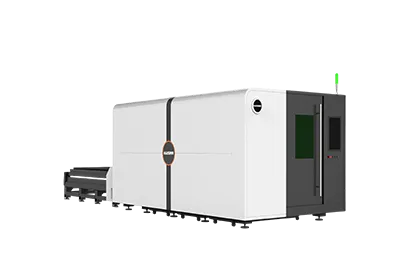
| Sheet Metal Processing |
HS-AE, HS-A, HS-A Pro, HS-B, HS-C, HS-G, and HS-H |
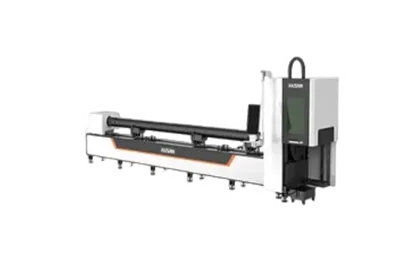
| Tube and Profile Processing |
HS-K, HS-M, HS-Q, HS-T, and HS-TA |
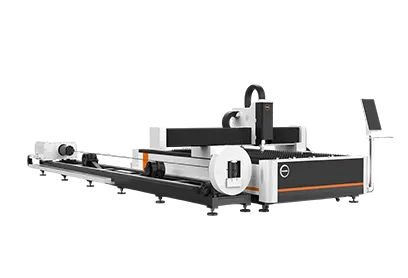
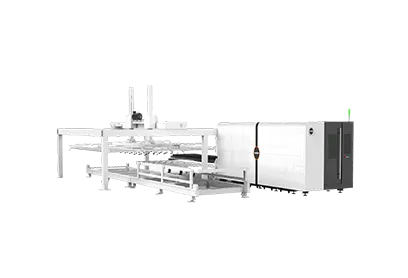
| Combined Sheet and Tube Processing |
HS-AT, HS-BT, and HS-CT |
| Sheet Loading and Production Automation |
Semi-automatic loading systems, cantilever loading equipment, and fully automatic production-line solutions |
These are product-range references rather than automatic model recommendations. The final configuration must be evaluated against the buyer’s workpieces and technical requirements.
Explore the relevant HAISINN product categories:
Sheet Metal Laser Cutting Machines | Tube Laser Cutting Machines | Sheet & Tube Laser Cutting Machines
7. How Should You Evaluate Laser Cutting Samples Before Purchasing?
Sample cutting provides an opportunity to assess a proposed machine using workpieces relevant to your production.
For a meaningful demonstration, provide representative drawings and material requirements whenever possible.
Sample Cutting Evaluation Checklist
| Evaluation Area |
What Buyers Should Check |
| Material |
Whether the tested material matches the intended application |
| Thickness |
Whether the test covers relevant production thicknesses |
| Part Geometry |
Whether the sample represents normal or critical workpieces |
| Dimensions |
Whether agreed dimensions and tolerances are achieved |
| Edge Quality |
Whether the finished edge meets the agreed acceptance criteria |
| Holes and Corners |
Whether critical features meet the drawing requirements |
| Processing Time |
Time recorded under clearly defined test conditions |
| Repeatability |
Whether repeated samples meet the agreed requirements |
Ask the supplier to document relevant test conditions and provide sample results where practical.
Cutting speed alone should not determine the purchasing decision. The finished part must also satisfy the agreed quality requirements.
8. What Should You Check During a Factory Acceptance Test?
A Factory Acceptance Test (FAT) provides an opportunity to evaluate equipment against an agreed inspection plan before shipment.
The exact testing scope should be confirmed with the supplier in advance.
Relevant checks may include confirmation of the machine model and configuration, inspection of agreed major components, operational demonstrations, sample cutting, review of acceptance criteria, and verification of required documentation.
HAISINN’s factory information describes a three-stage quality control process covering Incoming Quality Control (IQC), In-Process Quality Control (IPQC), and Outgoing Quality Control (OQC).
Buyers can review the company’s publicly presented manufacturing and inspection activities on its Factory page.
The specific FAT procedures and acceptance criteria for an individual purchase should still be agreed upon in writing.
A factory acceptance test does not automatically replace installation checks or commissioning at the customer’s site.
Conclusion: A Better Quotation Starts with Better Purchasing Information
Preparing a complete purchasing checklist is one of the most practical steps a factory can take before investing in a fiber laser cutting machine.
By documenting your production workload, workshop conditions, budget, sample-testing requirements, and expected supply scope, you can communicate more effectively with manufacturers and compare proposals on a clearer basis.
If you have not yet decided which type of equipment your factory needs, read our related guide: How to Choose the Right Fiber Laser Cutting Machine for Metal Fabrication?.
Ready to Request a Fiber Laser Cutting Machine Quotation?
Share your material types, thickness range, workpiece dimensions, representative drawings, and production requirements with HAISINN.
Our team can review your purchasing information and discuss a machine configuration based on your project needs.
Contact HAISINN
FAQ
What information do I need to get an accurate fiber laser cutting machine quotation?
Prepare your main materials, normal and maximum thicknesses, workpiece dimensions, representative drawings, production volume, and destination country. Include relevant installation constraints and quality requirements so the supplier can evaluate an appropriate configuration.
Do I need CAD drawings before requesting a quotation?
CAD drawings are helpful but are not always required for an initial inquiry. You can begin with material information, dimensions, and application details. Representative drawings become particularly valuable when discussing sample cutting, part geometry, and specific acceptance requirements.
How can I compare quotations from different laser cutting machine manufacturers?
Send each supplier the same purchasing requirements. Compare the exact machine configuration, included components, optional equipment, delivery scope, testing arrangements, installation support, warranty terms, and total project cost—not just the advertised machine price.
Is a factory acceptance test the same as on-site commissioning?
No. A factory acceptance test evaluates agreed equipment requirements before shipment, while on-site commissioning addresses installation and operation in the customer's actual facility. Their respective scopes should be confirmed in the purchase agreement.
Should I purchase a larger machine to prepare for future expansion?
Future production requirements should be considered, but they should not automatically determine the initial investment. Separate confirmed expansion plans from uncertain forecasts and evaluate whether the proposed configuration can meet both current needs and realistic future requirements.














 October 20, 2026