The Diameter-Range Misconception
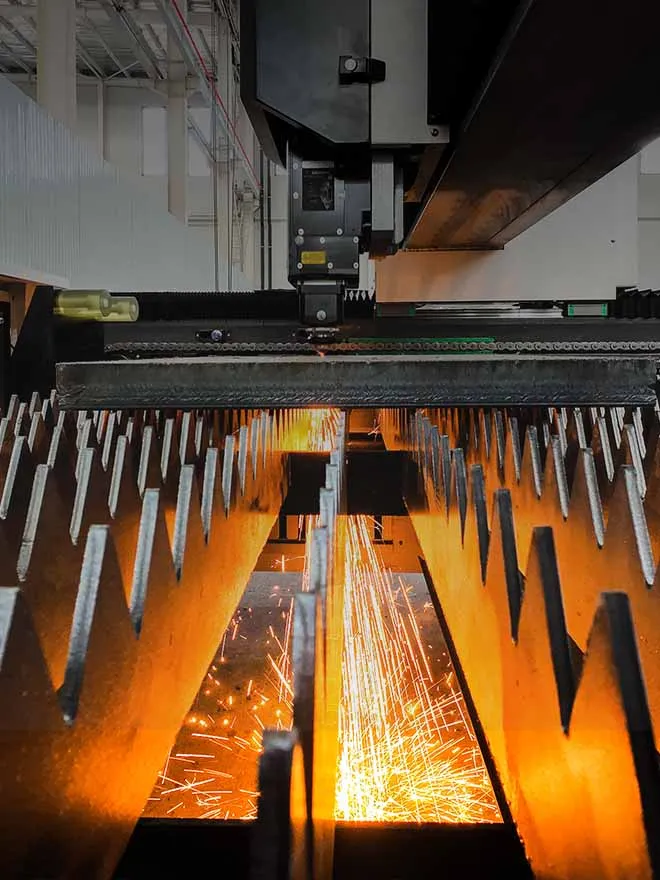
Buyers shopping for a laser tubing cutter tend to fixate on kilowatts first, treating power as the single number that separates a capable machine from an underpowered one. That instinct works reasonably well for flat-sheet cutting, where thickness and power scale in a fairly predictable way. Tube processing behaves differently.
A machine rated for a wide power band can still be the wrong purchase if its chuck and support structure aren’t built for small-diameter round or square stock. Conversely, a lower-power machine designed specifically around a tight diameter window — say Ø10–60 mm — can outperform a higher-power general-purpose tube laser on thin-wall precision parts, because the fixturing, rotation accuracy, and clamping force are matched to that size class rather than stretched across a broader range. The edge case worth flagging: buyers cutting a narrow band of small round or square tube (brackets, furniture frames, handrail components) are often better served by a machine positioned for that specific range than by the highest-power unit on a spec sheet. Diameter and length coverage should be the first filter; power is the second.
A laser tubing cutter is sized by three numbers before anything else matters: round-tube diameter range, maximum raw tube length, and laser power. Confirm those against your actual part mix first — automation and cutting speed only make sense once the diameter and length envelope is settled.
Tube Laser Cutting Machine Lineup Comparison
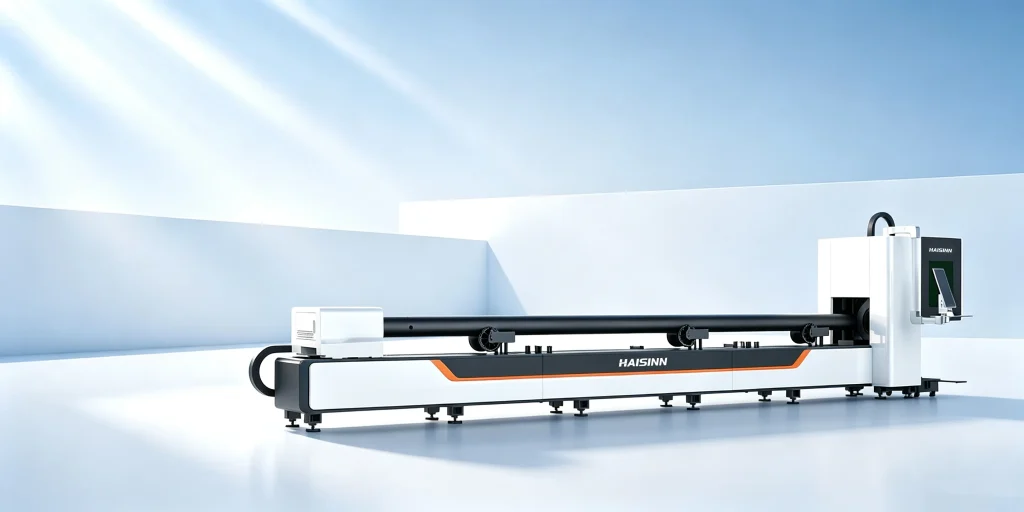
HAISINN’s tube-cutting range spans five model families, each positioned for a different combination of tube size, length and loading method. Published parameters vary in completeness across the lineup — where a figure isn’t confirmed in the reviewed public model tables, it’s marked “to be confirmed” rather than estimated.
| Model</td |
Positioning |
Round/Square Tube Size |
Max. Raw Tube Length |
Laser Power |
Loading |
| HS-K |
Economical tube cutting |
Up to approximately 350 mm |
Up to 12,000 mm |
Approximately 1.5–6 kW |
Manual / Standard |
| HS-M |
Heavy-duty tube processing |
To be confirmed |
To be confirmed |
To be confirmed |
To be confirmed |
| HS-Q |
Small-diameter tube cutting |
Ø10–60 mm round / 10–60 mm square |
Up to 6,500 mm |
Not publicly confirmed |
Manual / Standard |
| HS-T |
Full-cover tube cutting |
Up to approximately 350 mm |
Up to 12,000 mm |
To be confirmed |
Enclosed |
| HS-TA |
Automatic-loading tube cutting |
Up to Ø350 mm round / 250 × 250 mm square |
Approximately 6,500–12,000 mm |
To be confirmed |
Automatic, pneumatic chuck |
HS-Q: Small-Diameter Tube Cutting Parameters
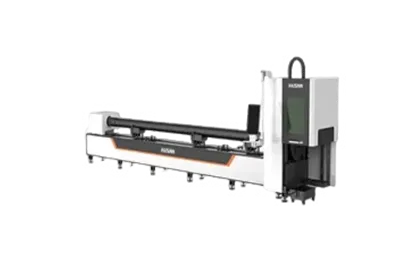
The HS-Q Small-Diameter Tube Laser Cutting Machine is positioned for round and square tube runs that sit well below the 350 mm ceiling common on HAISINN’s other tube models.
Round tube diameter: approximately Ø10–60 mm.
Square tube dimensions: approximately 10–60 mm per side.
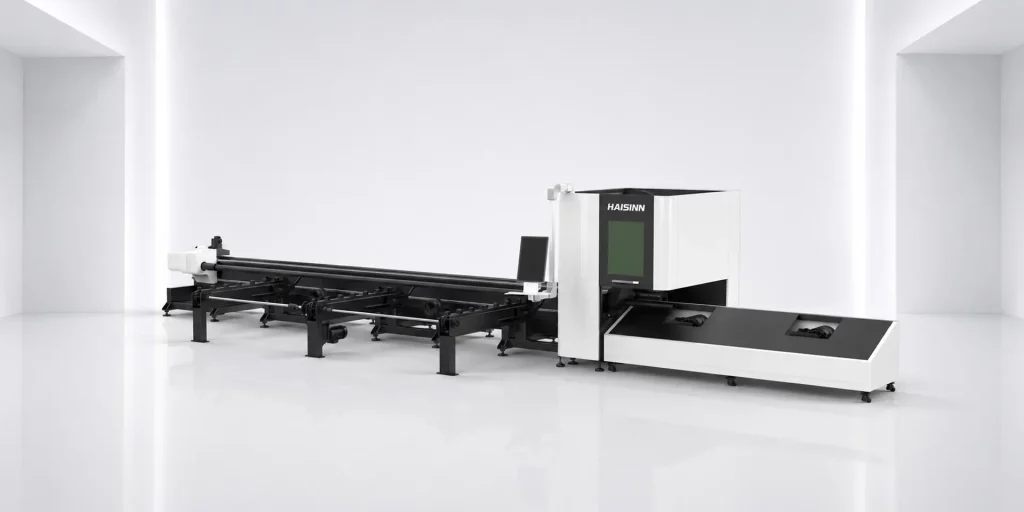
Maximum raw tube length: up to 6,500 mm.
Laser power: not clearly disclosed in the reviewed public category page. If small-diameter output rate or cycle time is a purchase factor for you, this is the one figure to request directly rather than infer from a comparable HS-series model — power bands don’t transfer cleanly between tube models built around different diameter classes.
For context, this narrower diameter and length window puts HS-Q in a different category than HS-T or HS-TA, both of which are built around tube sizes up to roughly 350 mm and lengths up to 12,000 mm. A shop running long structural tube alongside small precision stock will likely need two machines, not one flexible unit — HS-Q’s range doesn’t stretch to cover both ends.
Pre-Purchase Checklist
- List your actual tube size range, not the widest size you might someday cut. Match it against the diameter columns above before comparing anything else.
- Confirm raw tube length against your material supply chain. A 12,000 mm capacity machine bought for 6-meter stock is paying for unused travel.
- Request the laser power figure in writing for any model where it’s not publicly listed — this applies to HS-M and HS-Q based on the current published tables.
- Ask whether loading is manual, semi-automatic or automatic, and whether that matches your labor allocation and shift structure.
- Get positioning accuracy and chuck type for your specific tube wall thickness, since thin-wall small-diameter tube is more sensitive to clamping deformation than heavier structural tube.
- Request a written quotation tied to your material, diameter range, length and automation level — HAISINN, like most manufacturers in this category, configures pricing per project rather than publishing a fixed list, so a generic “starting at” figure isn’t useful for comparison.
- Ask which safety standards the specific configuration is documented against, and request the supporting paperwork rather than accepting a general compliance statement.
FAQ
What diameter range does a small-diameter laser tubing cutter typically cover?
On HAISINN’s HS-Q model, the published range is approximately Ø10–60 mm for round tube and 10–60 mm for square tube — a narrower band than general-purpose tube lasers, which commonly cover stock up to around 350 mm.
How long a tube can these machines process in one pass?
It depends on the model. HS-Q’s published maximum is 6,500 mm; HS-K and HS-T are rated up to 12,000 mm; HS-TA covers roughly 6,500–12,000 mm depending on configuration.
Why isn’t laser power listed for every model?
The public category pages for HS-M and HS-Q don’t include a confirmed power figure. Rather than estimate one, we recommend requesting it directly as part of a quotation — power requirements are typically matched to wall thickness and material rather than being a fixed spec per model.
How much does a laser tubing cutter cost?
Pricing is configuration-dependent and isn’t publicly listed. A formal quotation is prepared based on laser power, tube size range, length, automation level, core components and destination market.
Are these machines CE and FDA certified?
HAISINN states company-level CE and FDA compliance on its website. Certificate numbers, issuing bodies and model-specific coverage aren’t publicly disclosed, so certification for a specific configuration should be confirmed against the documentation for that exact machine before purchase.
What warranty applies?
Published warranty terms aren’t fully consistent across HAISINN’s own site — coverage periods differ by page and by component category. Treat the warranty length as unconfirmed until it’s written into your model-specific quotation and sales contract.
What safety standards apply to laser tube cutting equipment?
ISO 11553-1:2020 covers laser safety requirements for laser processing machines generally, and IEC 60825-1:2014 covers laser product classification and manufacturer-supplied safety information. Neither standard confirms that a specific HAISINN model has been tested against it — that requires the machine-specific documentation.
If you’re weighing HS-Q against a heavier-duty option like HS-TA for mixed tube runs, the next step is putting your actual size range and length distribution in front of an applications engineer — the published tables above will only get you to a shortlist.














 September 08, 2026