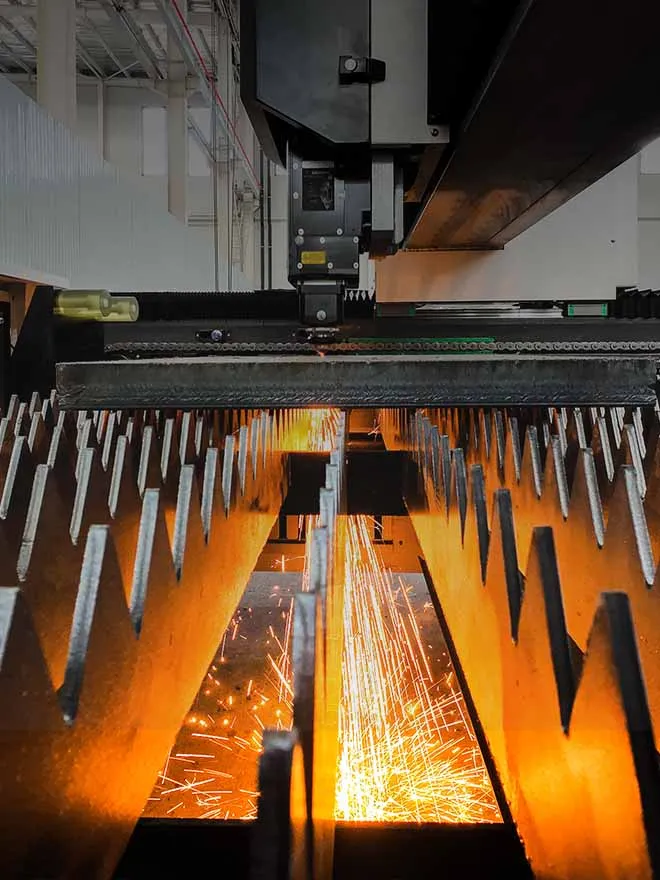
The main advantages of laser cutting for sheet metal fabricators are tool-free changeovers, narrow kerfs that tighten nesting, repeatable positioning accuracy, high axis speeds and the ability to cut carbon steel, stainless steel and aluminum on one machine. The trade-offs are capital cost, assist-gas consumption and laser-safety requirements.
The 10 Advantages, Ranked by How Often They Change a Shop’s Workflow
1. No dies, no punches, no tooling inventory
A laser cuts whatever geometry the CAD file describes. A new part costs programming time, not a new tool. That makes laser cutting suited to job shops running many part numbers in small batches, which is where turret punching and die-based blanking lose money on tooling and changeover.
2. Narrow kerf means tighter nesting
The beam removes a thin strip of material, so parts can be nested closer together and share cut lines where the software allows it. Over a year of full sheets, nesting density shows up directly in material spend.
3. Repeatable positioning across the full sheet
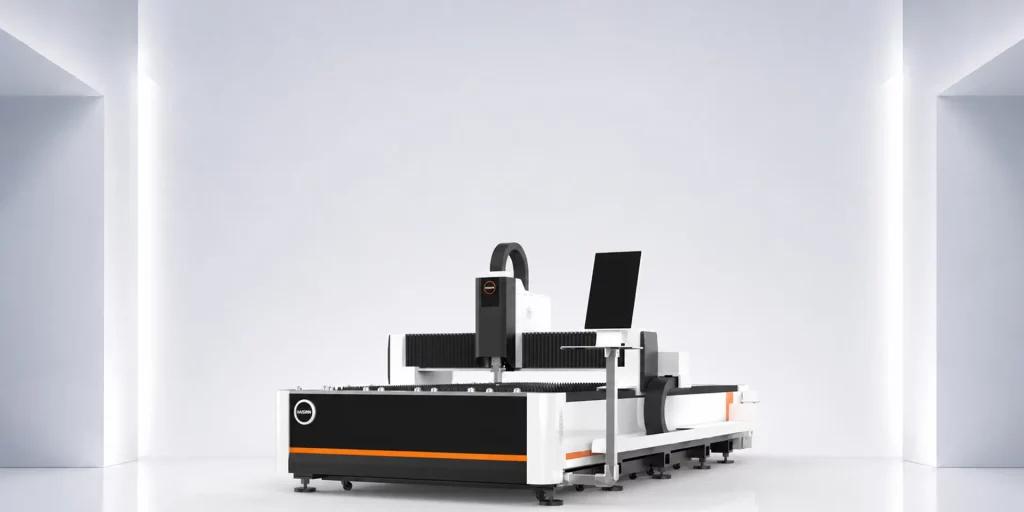
The HS-A Series lists a positioning accuracy of ±0.05 mm/m. In practice this means a hole pattern cut near the sheet origin and the same pattern cut at the far end of the bed should land in the same relative positions. That matters for parts that bolt together or go straight to bending.
4. High axis speed and acceleration
HS-A machines are published with a maximum speed of up to 140 m/min and acceleration of up to 1.5G. The acceleration figure deserves more attention than the speed figur. On a nest full of small holes and short contours, the head spends most of its time starting and stopping, not cruising.
5. Contactless cutting with no clamping force on the part
Nothing presses on the sheet during the cut, so thin material is not distorted by a punch or shear blade, and there is no burr rolled over by a tool edge. Heat is still involved. Tight internal corners and closely spaced cuts on thin sheet can build up heat locally, so cut sequencing still has to be planned.
6. One machine for several common metals
HAISINN lists carbon steel, stainless steel and aluminum as typical HS-A materials. A shop quoting mixed-material jobs can keep them on one cell instead of routing stainless to one process and mild steel to another. Achievable thickness and edge quality differ by material, laser power and assist gas, so test cuts on your own material are the only reliable reference.
7. Power you can size to your thickness mix
Within one series, HS-A configurations range from 1.5 kW to 40 kW. A fabricator mostly cutting thin enclosures and brackets does not need the same source as one cutting structural plate. Buying to the actual thickness distribution, rather than the thickest part you might occasionally see, keeps the source cost proportional to the work.
8. Full-sheet and long-part capacity
The largest published HS-A working area is 12,200 × 2,500 mm. Long parts such as rails, trims and chassis members can be cut in one piece without splicing, and full sheets can be loaded without pre-shearing. Smaller beds in the series suit shops with limited floor space.
9. Edges that often go straight to the next process
Compared with plasma cutting, the common thermal alternative in fabrication shops, fiber laser cutting generally produces a narrower kerf and a smaller heat-affected zone on thin to medium sheet. That often removes or shortens the grinding step before welding, bending or powder coating. Whether it does in your shop depends on the quality class you specify. ISO 9013:2017 (Amendment 1:2024) classifies thermal cuts by perpendicularity or angularity tolerance and surface roughness, so that is the standard to write into the acceptance criteria rather than “clean edge.”
10. A clear path to automation
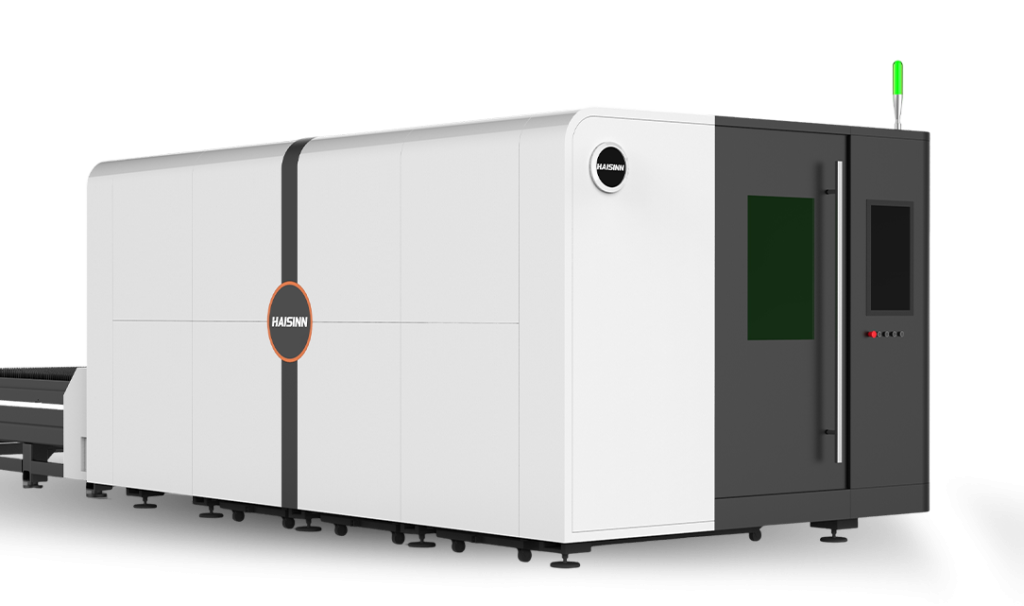
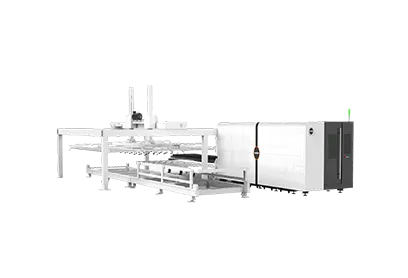
Programs, nests and machine data are digital from the start, so loading and unloading can be added later. HAISINN offers sheet semi-automatic loading, cantilever vacuum handling and a fully automatic cutting line as separate configurations. The published automatic line covers 1.5–6 kW and working areas of 3,048 × 1,524 mm and 6,050 × 1,524 mm, so it is not a drop-in add-on for every HS-A size.
HS-A Series: The Numbers Behind the List
| Parameter |
Published HS-A value |
Linked advantage |
| Laser power |
1.5–40 kW (by configuration) |
#6, #7 |
| Maximum working area |
12,200 × 2,500 mm |
#8 |
| Maximum speed |
Up to 140 m/min |
#4 |
| Maximum acceleration |
Up to 1.5G |
#4 |
| Positioning accuracy |
±0.05 mm/m |
#3 |
| Typical materials |
Carbon steel, stainless steel, aluminum |
#6 |
| Table structure |
Single platform |
See limitations |
These are series-level ranges. Any single machine has one power rating and one bed size, and both are set in the quotation.
Laser vs. Plasma vs. Punching: Where Each Method Fits
| Dimension |
Fiber laser cutting |
Plasma cutting |
CNC punching |
| Tooling per new geometry |
None |
None (consumables only) |
Punch and die sets |
| Kerf and small features |
Narrow kerf, fine features and small holes possible |
Wider kerf, limits on small hole size |
Limited to available tool shapes |
| Heat input |
Localized |
Larger heat-affected zone |
No thermal input |
| Typical post-cut work |
Often minimal on thin to medium sheet |
Grinding/deburring more common |
Deburring; tool marks possible |
| Forming features (louvers, extrusions) |
Not possible |
Not possible |
Possible with form tools |
| Capital cost tier |
Higher; rises with laser power |
Lower entry cost |
Varies with tonnage and tooling |
Punching keeps one real advantage over laser: it can form features in the same setup. Shops making many louvered or embossed panels often run both processes.
Limitations That Should Affect the Decision
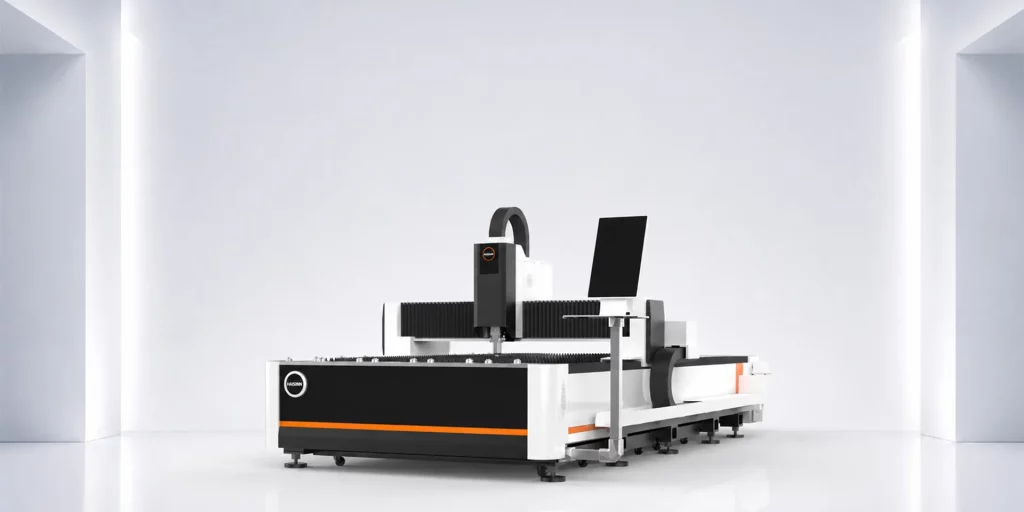
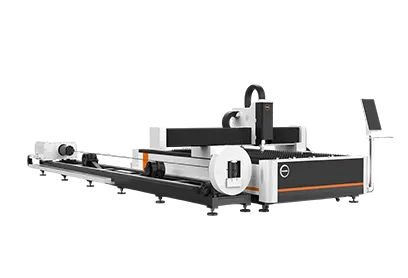
- Single-platform downtime. The HS-A is a single-platform machine. While the operator unloads parts and loads the next sheet, the laser is idle. If your jobs are many short nests, an exchange-table machine such as the HS-B Series removes most of that wait, at higher cost and footprint.
- Assist gas is a running cost. Nitrogen or oxygen consumption depends on thickness and edge requirements, and high-power cutting of thicker stainless with nitrogen can make gas a significant line item. Get a gas consumption estimate for your actual part mix before comparing operating costs.
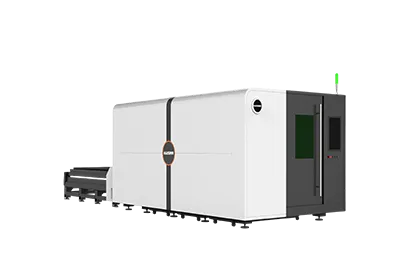
- Laser safety has to be designed in. ISO 11553-1:2020 sets laser safety requirements for laser processing machines, and IEC 60825-1:2014 covers laser product classification and protective features. A single-platform machine without a full enclosure needs workplace controls covering guarding, access and training. HAISINN’s HS-C and HS-I series are fully enclosed configurations for shops that prefer that route.
- Reflective metals need verification. Aluminum is on the HS-A material list, but cutting performance on reflective alloys should be confirmed through test cuts at the quoted power level rather than assumed.
FAQ
What is the biggest advantage of laser cutting for a small fabrication shop?
Usually the absence of tooling. New part numbers only need programming, which keeps short runs and prototype work profitable.
Is laser cutting more accurate than plasma cutting?
On thin to medium sheet, fiber laser cutting generally produces a narrower kerf and finer features. The HS-A Series publishes ±0.05 mm/m positioning accuracy; final part tolerance still depends on material and thermal effects.
Does a higher-power laser always cut better?
No. More power mainly extends thickness capacity and speed on thicker material. For mostly thin sheet, a lower-power source can deliver comparable results at a lower purchase cost.
Can one laser cutter handle stainless steel and aluminum?
HAISINN lists carbon steel, stainless steel and aluminum as typical HS-A materials. Thickness limits and edge quality vary by material, power and assist gas, so confirm with test cuts.
How much does an HS-A laser cutting machine cost?
Quotations are prepared per configuration, covering laser power, working area, automation, components, destination market and service scope.
What is the main disadvantage of a single-platform laser cutter?
The laser stops during unloading and loading. Shops with high sheet turnover often choose an exchange-table design to reduce that idle time.














 November 03, 2026