Choosing a fiber laser cutting machine is not simply a matter of comparing laser power or machine price. A machine that works well for thin stainless steel production may not be the right choice for large-format structural steel, mixed-thickness job-shop work, or continuous high-volume manufacturing.
For industrial buyers, the real questions are more practical: What materials will be processed? What thickness range represents most daily production? How large are the sheets? How frequently must operators load material? Is a single platform enough, or will an exchange table improve workflow? Does the factory need a fully enclosed system, large-format cutting, or automatic material handling?
Understanding how fiber laser cutting works makes these decisions easier.
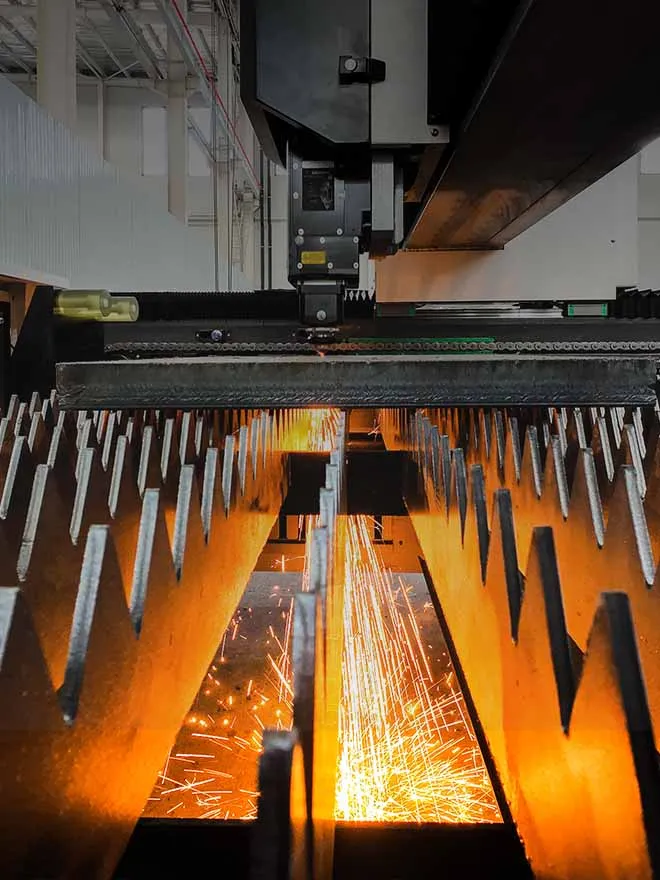
A fiber laser cutting machine is a CNC-controlled metal processing system that uses a focused fiber laser beam to heat and separate material along a programmed cutting path. The laser creates the cutting energy, while the cutting head, motion system, assist gas, CNC controller, machine structure, and extraction system work together to produce the finished part.

Article Outline
- What Is a Fiber Laser Cutting Machine?
- How Does a Fiber Laser Cutting Machine Work?
- What Materials Can a Fiber Laser Cut?
- What Materials Are Not Suitable for Fiber Laser Cutting?
- Fiber Laser Cutting vs Other Laser-Cutting Processes
- What Are the Main Components of a Fiber Laser Cutting Machine?
- What Are the Typical Industrial Applications?
- How Do You Select a Suitable Fiber Laser Cutting Machine?
- What Should Buyers Confirm Before Purchasing?
- FAQ
- Conclusion
What Is a Fiber Laser Cutting Machine?
A fiber laser cutting machine is an industrial CNC machine designed primarily for cutting metal sheets, tubes, profiles, or other metallic workpieces using a highly concentrated laser beam.
The laser source generates the beam and delivers it through an optical fiber to the cutting head. The cutting head focuses this energy onto a very small area of the workpiece. The material is heated rapidly, and an assist gas removes molten material from the cutting kerf.
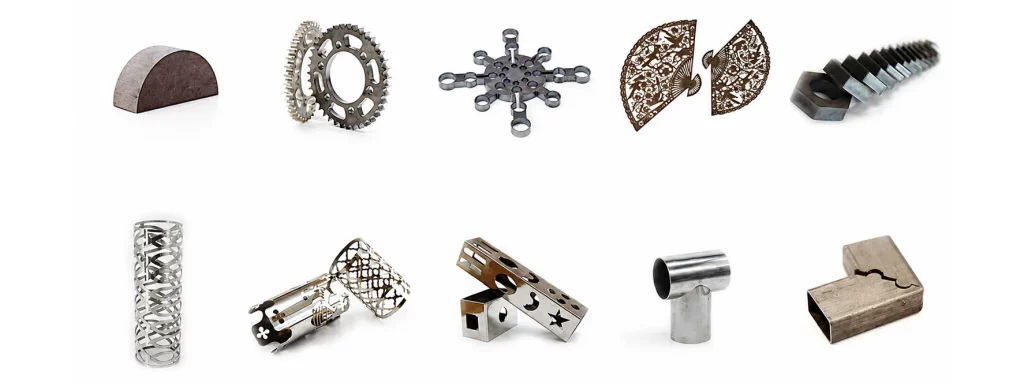
This combination allows manufacturers to create contours, holes, slots, brackets, panels, frames, structural components, machine parts, and many other fabricated metal products.
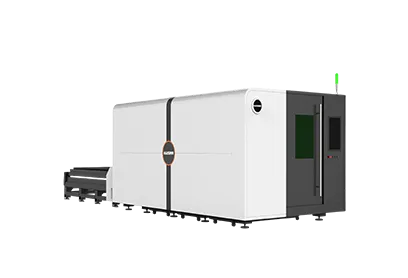
The term “fiber laser cutting machine” actually covers several machine structures. Depending on production requirements, a buyer may encounter:
| Machine Type |
Main Production Direction |
Best Suited To |
| Single-Platform Laser Cutter |
Standard sheet cutting |
General fabrication and lower loading frequency |
| Exchange-Table Laser Cutter |
Alternating cutting and loading |
Higher machine utilization |
| Fully Enclosed Laser Cutter |
Enclosed sheet processing |
Factories prioritizing containment and workshop environment |
| Large-Format Laser Cutter |
Long or oversized plates |
Structural steel and heavy fabrication |
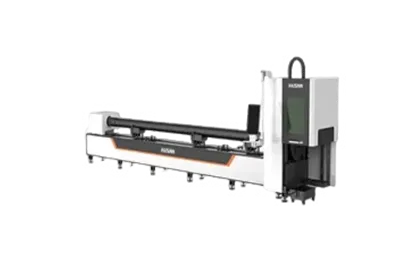
| Tube Laser Cutter |
Tubes and profiles |
Furniture, machinery frames, and pipe processing |
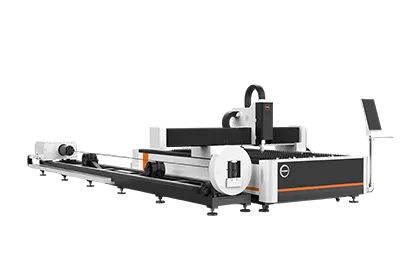
| Sheet-and-Tube Laser Cutter |
Sheets plus tubes |
Mixed-production factories |
| Coil-Fed Laser System |
Continuous coil processing |
Repetitive production and automated material flow |
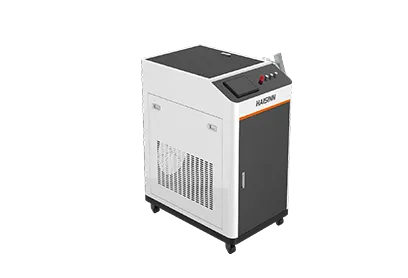
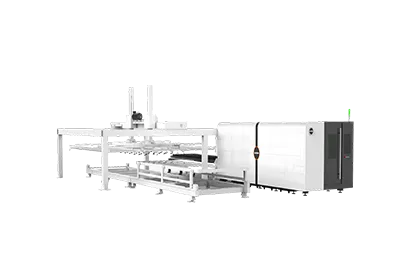
HAISINN currently lists sheet-metal systems including single-platform, exchange-table, full-cover, large-format and automatic coil-fed product directions, so the machine structure can be matched to different production models rather than treated as one universal configuration.
How Does a Fiber Laser Cutting Machine Work?
The basic process can be understood as a sequence of energy generation, beam delivery, focusing, material interaction, motion control and material removal.
1. The laser source generates the beam
The fiber laser source produces the laser energy required for cutting.
One important feature of fiber technology is that the laser beam can be delivered through optical fiber instead of relying on the longer external mirror-based beam-delivery arrangements associated with traditional CO₂ systems.
2. The cutting head focuses the beam
The beam enters the cutting head and is focused onto the workpiece.
Focusing concentrates the laser energy into a small processing area. The correct focal position depends on the material, thickness, cutting process and machine configuration.
This is one reason why cutting performance cannot be judged from laser power alone.

3. The material absorbs laser energy
When the focused beam reaches the metal, the material absorbs energy and heats rapidly.
Depending on the cutting process, material in the cutting zone may melt or undergo other thermal reactions that help separate the part from the surrounding sheet.
4. Assist gas clears the cutting kerf
Assist gas has an important role in the cutting process.
Oxygen can participate in a reactive cutting process for suitable steels, while inert gases such as nitrogen remove molten material without providing the same oxidation reaction. Gas type, pressure, nozzle condition and process settings can therefore influence cutting quality and operating cost.
5. CNC motion creates the required geometry
The controller coordinates the cutting head and machine axes according to the programmed tool path.
This allows the machine to produce:
- External contours
- Internal holes
- Slots
- Openings
- Complex profiles
- Nested sheet-metal components
- Repetitive production parts
The quality of the finished component therefore depends on the complete system rather than on the laser source alone.
What Materials Can a Fiber Laser Cut?
Fiber laser technology is mainly associated with industrial metal processing.
Common applications include:
Carbon Steel
Carbon steel is one of the most common materials processed by industrial laser cutting machines.
It appears in machinery frames, construction equipment, brackets, structural components, agricultural machinery, enclosures and general fabricated products.
The correct cutting configuration depends on thickness, required edge condition, productivity and downstream processes.
Stainless Steel
Fiber laser cutting is widely used for stainless steel components because it can produce complex sheet-metal geometries without requiring physical cutting tools to follow each contour.
Applications include:
- Food machinery
- Stainless enclosures
- Cabinets
- Kitchen equipment
- Industrial equipment
- Architectural components
- General fabricated parts
Aluminum
Aluminum can also be processed using suitable fiber laser systems.
However, aluminum grade, thickness, surface condition, laser power and cutting parameters must be considered when selecting equipment.
Buyers should therefore avoid asking only, “Can the machine cut aluminum?”
A better question is:
Can the proposed configuration repeatedly process my aluminum grade, thickness range and required part quality at my production volume?
Copper and Brass
Modern solid-state and fiber laser systems can also be used for reflective non-ferrous metals such as copper and brass when the machine and laser source are designed for the application. TRUMPF, for example, identifies reflective-metal processing as an area where fiber technology can perform effectively.
However, material compatibility should still be confirmed for the exact machine configuration.
Other Metallic Materials
Other metals and alloys may also be suitable depending on:
Material composition
Surface condition
Thickness
Laser wavelength
Laser power
Cutting head
Assist gas
Required cut quality
Industrial buyers should provide actual material samples when an application is unusual or difficult to evaluate from specifications alone.
What Materials Are Not Suitable for Fiber Laser Cutting?
A common purchasing mistake is assuming that a fiber laser cutter is a universal laser cutting machine for every material.
It is not.
Fiber laser cutting systems are primarily optimized for metal processing.
Many Non-Metallic Materials
Materials such as wood, clear acrylic, glass, textiles and similar non-metallic products are generally associated with other laser technologies or processing methods rather than conventional industrial fiber sheet-metal cutters.
CO₂ lasers, for example, continue to be used for many non-metallic materials including plastics, textiles, glass, acrylic and wood.
If a factory mainly processes non-metallic products, choosing a metal-focused fiber laser machine simply because fiber technology is newer would be a poor purchasing decision.
Hazardous or Unknown Materials
Some materials, coatings, laminates or composites can create hazardous fumes, corrosive by-products or unpredictable thermal reactions when exposed to laser energy.
A material should not be processed merely because the beam can physically mark or cut it.
Before processing an unfamiliar material, buyers should confirm:
- Material composition
- Coating composition
- Fume characteristics
- Extraction requirements
- Fire risk
- Manufacturer recommendations
- Appropriate operating procedures
Highly Specialized Materials
Even when a material is technically cuttable, conventional sheet-metal laser equipment may not be the best production method.
Part tolerance, heat-affected zone, edge quality, thickness, geometry or surface requirements may make another process more appropriate.
The correct question is therefore not only:
Can a fiber laser cut this material?
It is:
Can it cut this material with the quality, productivity, repeatability and operating cost required by my production process?
Fiber Laser Cutting vs Other Laser-Cutting Processes
For industrial metal fabrication, one of the most common comparisons is fiber laser versus CO₂ laser cutting.
The technologies generate and deliver laser energy differently, which affects their application strengths.
| Factor |
Fiber Laser |
CO₂ Laser |
| Primary Modern Application |
Metal processing |
Metals and a wider range of non-metals, depending on the system |
| Reflective Metal Processing |
Strong application area with suitable equipment |
More application-dependent |
| Beam Delivery |
Fiber-based optical delivery |
Traditional optical beam path |
| Typical Purchasing Focus |
Productivity, metal processing, and automation |
Material- and application-specific requirements |
| Non-Metal Applications |
Limited for conventional metal-cutting systems |
Common for acrylic, wood, textiles, and other materials |
| Selection Basis |
Material, thickness, volume, and production structure |
Material, thickness, edge requirements, and application |
There is no useful reason to declare one laser technology universally “better.”
The correct choice depends on the production problem.
A metal fabrication company processing carbon steel, stainless steel and aluminum has very different priorities from a business cutting acrylic displays or other non-metallic products.
Research and industrial machine manufacturers also show that direct performance comparisons depend heavily on material, thickness, process conditions and desired edge quality.
For today’s metal fabrication buyers, fiber laser systems are especially important because of their strong position in sheet-metal and reflective-metal processing. But the buying decision should still be based on the actual workpiece mix rather than on technology labels.
What Are the Main Components of a Fiber Laser Cutting Machine?
A laser cutter should be evaluated as a complete manufacturing system.
Fiber Laser Source
The laser source generates the energy used for cutting.
Power is important, but buyers should not assume that higher power automatically creates a better production solution.
The correct power depends on:
- Material
- Thickness distribution
- Required productivity
- Cut-quality expectations
- Assist-gas strategy
- Investment level
- Operating cost
Laser Cutting Head
The cutting head focuses the laser beam onto the material.
Its operation can influence focus control, nozzle positioning, cutting stability and adaptation to different material conditions.
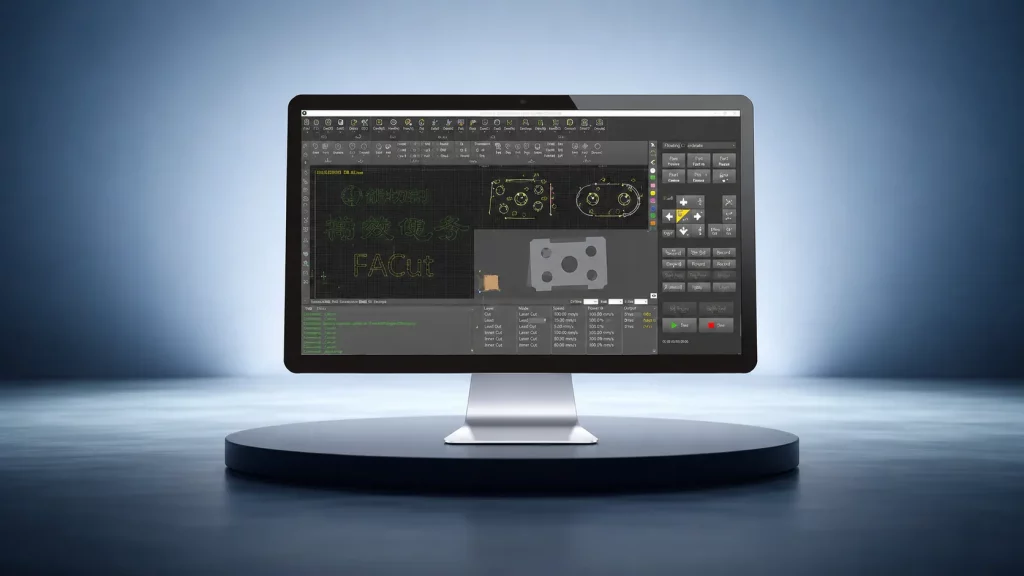
CNC Control System
The control system coordinates the programmed cutting path and machine movement.
Depending on the complete system, software may also support functions related to nesting, process parameters, production management and machine monitoring.
Machine Bed
The machine bed provides the structural foundation.
For buyers processing large or heavy sheets, machine rigidity and load handling become increasingly important purchasing considerations.
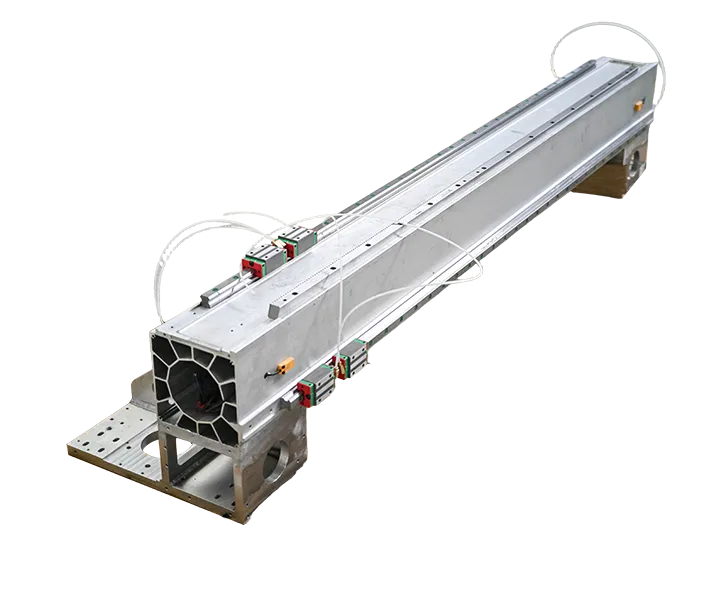
Gantry and Motion System
The gantry, servo drives, linear guides, rack-and-pinion systems or other motion components determine how accurately and consistently the cutting head follows the programmed path.
High theoretical laser power cannot compensate for an unsuitable mechanical platform.
Cooling System
Laser sources, cutting heads and related equipment generate heat during operation.
An appropriately configured cooling system helps maintain operating conditions for the laser system.
Assist-Gas System
The factory may require oxygen, nitrogen, air or another approved gas arrangement depending on the cutting process.
Buyers should evaluate not only whether a machine can use a particular gas, but also the local availability and operating cost of that gas.
Dust and Fume Extraction
Laser cutting produces smoke, particles and process emissions.
Extraction design should therefore be part of machine selection and workshop planning rather than an afterthought.

Safety System and Enclosure
Industrial laser equipment requires appropriate safety controls.
Depending on the machine design, these can include guarding, enclosures, interlocks, protective viewing systems and operating procedures.
Loading and Unloading Equipment
Material handling becomes increasingly important as production volume rises.
Possible directions include:
- Manual loading
- Semi-automatic loading
- Automatic loading
- Exchange tables
- Sheet storage integration
- Automatic unloading
- Coil feeding
- Production-line integration
Automation should solve a real production bottleneck rather than simply make the machine specification look more advanced.
What Are the Typical Industrial Applications?
Fiber laser cutting machines are used throughout metal fabrication because one machine can produce many different part geometries without requiring a dedicated mechanical cutting tool for every contour.
Sheet Metal Fabrication
Job shops and contract manufacturers often process a wide variety of materials and customer drawings.
Their main priorities normally include:
- Flexible production
- Short changeover
- Material utilization
- Machine utilization
- Reliable cutting
- Ability to process different orders
Machinery Manufacturing
Machinery manufacturers use laser-cut parts for:
- Frames
- Covers
- Guards
- Brackets
- Panels
- Structural members
- Internal components
For these factories, laser cutting is normally only one stage in a broader workflow involving bending, welding, cleaning and assembly.
Electrical Cabinets and Enclosures
Cabinet production frequently requires repeated holes, slots, openings and external contours.
The ability to change designs through CNC programming makes laser cutting suitable for different enclosure models and production batches.
Agricultural and Construction Equipment
These industries may require larger components, stronger materials and different thickness ranges.
Machine working area, material handling and production logistics can therefore become as important as laser power.
Automotive and Industrial Components
Laser cutting can support both prototype and production components depending on the application.
For repetitive manufacturing, automation and part handling can become important considerations.
Metal Furniture and Fabricated Products
Manufacturers of shelving, furniture frames, displays and related products may use sheet laser cutters together with tube laser cutting and welding equipment.
The best production solution depends on how much of the product is made from flat sheet versus tubes and profiles.
How Do You Select a Suitable Fiber Laser Cutting Machine?
The correct machine should be selected backwards from production requirements.
Do not begin with the question:
“Which machine has the highest laser power?”
Begin with your parts.
1. Define Your Material Mix
List the materials that account for most production.
For example:
- Carbon steel
- Stainless steel
- Aluminum
- Copper
- Brass
- Other alloys
Then identify which materials represent regular production and which appear only occasionally.
2. Define the Thickness Distribution
Do not select laser power only according to the single thickest part your factory has ever produced.
A factory that occasionally cuts thick plate but spends most of the week processing thinner material may require a different configuration from a heavy-fabrication company processing thick materials every day.
Evaluate:
- Minimum thickness
- Maximum thickness
- Most common thickness
- Production volume by thickness
- Required edge quality
3. Confirm Sheet Dimensions
Working area determines more than maximum sheet size.
It also affects:
- Material purchasing
- Nesting possibilities
- Floor space
- Loading method
- Workshop logistics
- Investment
Large-format equipment is useful when production genuinely involves oversized plates, but unnecessary machine size can increase space and investment requirements.
4. Choose the Machine Structure
Ask how material moves through the factory.
A single-platform system may be appropriate for one production model, while an exchange table may help separate cutting time from some loading and unloading activities.
A full-cover system may be preferred where enclosure and workshop containment are major priorities.
A large-format machine may be necessary for oversized workpieces.
A coil-fed system may make sense when production starts from coil stock and follows a continuous process.
HAISINN currently presents these as distinct sheet-metal laser cutting directions rather than one universal machine structure.
5. Evaluate Production Volume
Higher production volume changes the purchasing calculation.
Ask:
- How many shifts will the machine run?
- How often will sheets be loaded?
- How much idle time comes from material handling?
- Can operators keep up with the machine?
- Does unloading interrupt production?
- Is material storage close to the machine?
This information helps determine whether automation is justified.
6. Consider Factory Layout
A machine must fit into the actual production environment.
Planning should account for:
-
- Machine footprint
- Loading space
- Unloading space
- Sheet storage
- Finished-part handling
- Gas supply
- Electrical supply
- Cooling equipment
- Dust extraction
- Maintenance access
- Future automation
A layout that works on a quotation drawing may still be inefficient if forklifts, cranes, material racks or operators cannot move around the machine efficiently.
7. Compare the Complete Configuration
Two machines with the same advertised laser power can still represent very different production systems.
Compare:
- Laser source
- Cutting head
- Controller
- Servo system
- Mechanical structure
- Motion components
- Cooling system
- Dust extraction
- Safety design
- Loading system
- Optional automation
- Installation support
- Training
- Spare parts
- Technical support
The machine should be evaluated as a complete production platform.
What Should Buyers Confirm Before Purchasing?
Before requesting a final quotation, prepare a clear production requirement.
| Buyer Information |
Why It Matters |
| Material Types |
Determines process suitability |
| Minimum and Maximum Thickness |
Helps define the required cutting capability |
| Most Common Thickness |
Helps avoid oversizing |
| Sheet Dimensions |
Determines the required working area |
| Daily or Monthly Volume |
Helps evaluate productivity requirements |
| Part Drawings |
Allows a more realistic process evaluation |
| Required Edge Quality |
Influences the cutting strategy |
| Shift Pattern |
Helps evaluate machine utilization |
| Loading Method |
Determines material-handling requirements |
| Factory Layout |
Affects installation and automation |
| Available Gases |
Influences process planning |
| Future Production Plans |
Helps prevent early capacity limitations |
Whenever possible, send representative drawings and material information to the manufacturer.
A cutting sample can often tell a buyer more about application suitability than a long list of theoretical specifications.
Conclusion
A fiber laser cutting machine is not simply a laser source mounted on a CNC table. It is a complete metal-processing system in which the laser source, cutting head, machine structure, motion system, controller, assist gas, extraction system and material-handling method must work together.
The right machine therefore depends on your material, thickness distribution, sheet size, production volume, part geometry, workshop layout, automation requirements and future capacity plans.
Higher power, a larger table or more automation is not automatically better. The best configuration is the one that matches the production work the machine will actually perform.
If you are evaluating a fiber laser cutting machine, send HAISINN your material types, thickness range, sheet dimensions, representative drawings and expected production volume. We can help you narrow the machine structure, laser power direction, working area and automation requirements before preparing a quotation.
FAQ
Is a fiber laser cutting machine only used for metal?
Conventional industrial fiber laser cutting machines are primarily designed for metal processing. Carbon steel, stainless steel, aluminum and certain non-ferrous metals are common applications. Buyers mainly processing wood, acrylic, glass or textiles should evaluate other laser technologies or manufacturing processes.
Can a fiber laser cut aluminum?
Yes, suitable fiber laser systems can process aluminum. However, actual capability depends on the alloy, thickness, laser power, optical configuration, assist gas, required quality and machine setup.
Can fiber lasers cut copper and brass?
Suitable modern fiber laser systems can process reflective metals including copper and brass. The exact application should still be confirmed with the equipment manufacturer, particularly for demanding thicknesses or production requirements.
How thick can a fiber laser cutting machine cut?
There is no single thickness answer for all machines. Cutting capability depends on the material, laser power, laser source, cutting head, assist gas, process parameters and required edge quality. Buyers should request verified cutting information or samples for the exact proposed configuration rather than applying one generic thickness chart to every machine.
Is higher fiber laser power always better?
No. Higher power may expand processing capability or increase productivity in suitable applications, but it can also increase equipment investment and associated production requirements. The correct power should match the factory's actual material and thickness distribution.
Should I choose a single platform or exchange table?
A single platform can be suitable when production requirements and loading frequency are moderate. An exchange-table machine is worth considering when loading and unloading activity would otherwise create significant idle time. The decision should be based on production flow rather than the machine structure alone.
When does a factory need automatic loading?
Automatic loading becomes more relevant when material handling repeatedly limits machine utilization, production runs across multiple shifts, sheets are heavy or frequently loaded, or the factory wants to integrate laser cutting into a broader automated material-flow system.
How should I compare fiber laser cutting machine manufacturers?
Compare manufacturers based on actual machine configuration, manufacturing capability, machine testing, application knowledge, cutting samples, documentation, training, installation support, spare-parts availability and long-term technical support. Do not make the decision based only on laser power and initial quotation price.














 August 07, 2026