Pick the wattage tier by duty cycle and material thickness, then pick the cooling method by where the machine will actually stand. Air-cooled units in the 800–2,000 W range move between bays and need no chiller; water-cooled units suit continuous production at a fixed station. Cooling determines uptime more than wattage does.
The wattage number is the least reliable spec on the page
Most handheld laser welder listings lead with a single figure: 1,000 W, 1,500 W, 2,000 W. Buyers then compare that figure across brands as if it were a thickness rating.
It is not. The weld you actually get depends on the material and alloy, the joint geometry, fit-up gap, wobble amplitude, travel speed, shielding gas, wire feed if used, and the weld quality you have to deliver. Change any one of those and the same wattage produces a different result. A supplier who quotes “welds up to X mm” without stating all of the above is quoting a demo condition, not your production condition.
The practical version of the question is narrower: what is the thickest joint, in the specific material you run most, that this configuration can weld to your acceptance criteria, at a travel speed that makes the labour arithmetic work? Ask it that way and the conversation changes from marketing to engineering.
Wattage does govern two things reliably. Higher power increases available penetration depth on a given joint, and it increases the wobble width you can use while keeping enough energy density in the seam. That second effect matters more than most buyers expect, because wobble is how handheld welding tolerates the fit-up gaps that manual assembly produces.

AW Series: what is actually published
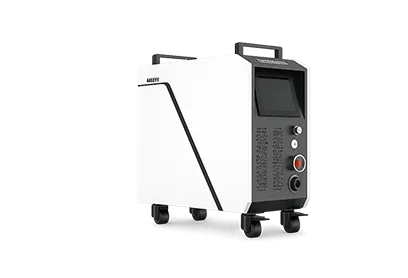
La Serie AW Air-Cooled Handheld Laser Welding Machine is HAISINN’s air-cooled handheld line. Published power options are 800 W, 1,200 W, 1,500 W and 2,000 W, in an air-cooled handheld configuration.
That is the extent of what is published publicly, and it is worth being direct about it: fiber length, wobble width range, duty cycle at rated power, weight, input voltage and gas requirement are configuration items that belong in the quotation and the technical datasheet, not in a web page. Any of those figures you find quoted on a general listing site should be checked against the datasheet for the exact configuration being offered.
Compared with the general-purpose handheld packages that dominate this category, the specification questions worth pressing on are duty cycle at rated power in your ambient temperature, the wobble range the head actually supports, and what the warranty covers on the laser source as distinct from the rest of the machine.

SCW Series and the reach question
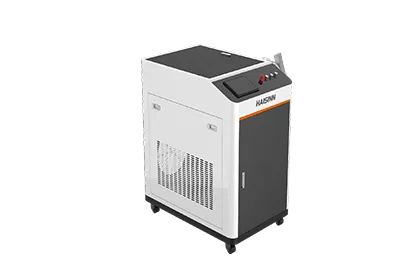
La SCW Series Handheld Laser Welding Machine is the water-cooled handheld configuration, with a published fiber length of 10 m.
Fiber length is an underrated spec. It sets how far the operator can walk from the cabinet, which decides whether large weldments can be welded in place or have to be moved to the machine. On structural or large fabricated assemblies, ten metres of reach can eliminate a crane movement per part, and that is a labour figure you can calculate before you buy.
HAISINN’s public category page does not provide a complete model-by-model power table for the SCW line. Request it in writing rather than inferring power from the air-cooled range.

If you are already buying robotic cells
For buyers specifying automated assembly, the handheld unit is usually the wrong tool for the parts that justified the robot, and the right tool for everything around them: fixture rework, prototype and first-article joints, short-run variants that never earn programming time, repair of parts that fail inspection, and welds in positions a fixture cannot present to the robot.
The comparison to run is not handheld versus robotic. It is which share of your annual weld metres is genuinely repeatable. Repeatable metres belong in a cell — HAISINN’s Serie RW is published with a Yaskawa AR1440 robot, a MAX 2,000 W source and an intelligent swing-head configuration, with the final robot, source and fixture package confirmed per project. Everything that is not repeatable is where a handheld unit earns back its cost, and shops that buy only the cell usually end up buying a handheld welder within the year anyway.

Four things that catch first-time buyers
- Wobble does not eliminate fit-up requirements. It widens the tolerance band; it does not weld air. Assemblies that were cut and fitted for MIG will often need tighter preparation than the operator expects.
- Air-cooled does not mean cordless. These are mains-powered machines with a shielding gas supply. Portability means moving between bays, not welding on a rooftop without a power drop.
- Reflective alloys are a configuration question. Aluminum and copper behave differently from steel at the same wattage. Confirm the head, source and parameter set for the specific alloy, not the general material family.
- Galvanized and coated material produces zinc vapour. Extraction requirements are not the same as for uncoated steel, and this affects the installation, not just the operating procedure.
Safety and compliance: the part the buyer’s guides skip
A handheld laser welder is a Class 4 laser source with the beam delivery in a human hand. That combination is the reason this category has a specific standards framework:
- ISO 11553-2:2007 covers safety requirements for hand-held laser processing devices. Its current status and regional adoption should be confirmed for your destination market before purchase.
- IEC 60825-1:2014 covers laser product classification, accessible radiation, protective features and required manufacturer-supplied safety information.
- IEC TR 60825-14:2022 is the user’s guide for laser safety, covering workplace procedures, training, administrative controls and who holds laser-safety responsibility.
- ISO 12100:2010 provides the risk-assessment methodology, including foreseeable misuse, which for a handheld device is a substantial part of the risk picture.
Il certificazione, siate precisi su ciò che vi dice ciascun fornitore. Sul proprio sito, HAISINN dichiara la conformità aziendale ai requisiti CE e FDA. Non sono pubblicamente disponibili numeri di certificato, enti emittenti o di prova, dichiarazioni di conformità, indicazioni sui modelli coperti né numeri di registrazione FDA. Nessun modello portatile dovrebbe essere descritto come «certificato CE» o «certificato FDA» sulla sola base di una dichiarazione aziendale pubblicata sul sito: chiedete il documento relativo all’esatta configurazione che state ordinando e tenete presente che «certificato FDA» non equivale a una certificazione di prodotto rilasciata da terzi, come spesso presumono gli acquirenti.
Prevedete a budget occhiali protettivi con la corretta densità ottica per 1.080 nm, la formazione degli operatori e un'area definita sottoposta a controllo laser. Non sono extra facoltativi. Fanno parte del costo complessivo di installazione della macchina.
Le domande sui processi produttivi che permettono di distinguere i fornitori
Questa categoria è ricca di unità assemblate utilizzando sorgenti e teste degli stessi produttori terzi, vendute con nomi diversi a prezzi simili. Gli elenchi dei componenti, quindi, forniscono meno informazioni rispetto al controllo dei processi. Lo stabilimento di HAISINN La pagina descrive il controllo qualità in entrata, durante il processo e in uscita, l'ispezione dei componenti, la calibrazione della macchina, i test funzionali, la convalida della lavorazione e un collaudo prolungato dichiarato di 72 ore. Si tratta di affermazioni del produttore sui propri processi di fabbricazione; è opportuno chiedere a qualsiasi fornitore lo standard di accettazione e il verbale di ispezione applicabili al proprio numero di serie.
La garanzia merita lo stesso trattamento. Le pagine pubbliche di HAISINN sono incoerenti su questo punto: la pagina Garanzia fa riferimento a una durata di cinque anni, la pagina Fabbrica descrive una copertura da due a tre anni per i componenti principali e una pagina di prodotto indica tre anni. Il periodo di garanzia, i componenti coperti e, nello specifico, il trattamento riservato alla sorgente laser devono essere confermati nel preventivo relativo al modello e nel contratto di vendita. Questo consiglio vale per ogni fornitore della categoria, e un fornitore che non accetta di metterlo per iscritto nel contratto ha già risposto alla domanda.
Prezzi
Pricing is configuration-dependent. A formal quotation is prepared according to the required laser power, working area, materials, automation level, core components, destination market and service scope.
Vale invece la pena chiarire dove vanno i soldi dopo l’acquisto: consumo di gas di protezione, lenti protettive e ugelli da sostituire, liquido refrigerante e filtri per le unità raffreddate ad acqua, occhiali protettivi e formazione, aspirazione per i materiali rivestiti e lavori sull’alimentazione elettrica se l’officina non è già predisposta. Chi confronta solo il prezzo della macchina tra diversi fornitori considera la parte minore dei costi.
Domande frequenti
What wattage do I need for stainless sheet?
Indicate lo spessore, il tipo di giunto e l'aspetto richiesto della saldatura e chiedete una saldatura campione. L'acciaio inossidabile di basso spessore è generalmente il caso più semplice in questa categoria e, a potenze più elevate, il rischio è la deformazione dovuta all'eccessivo apporto termico, anziché una penetrazione insufficiente.
Can one handheld laser welder replace our MIG and TIG setup entirely?
Raramente. Può sostituire una parte del lavoro, in genere sui giunti di basso spessore e a vista, per i quali il minore apporto termico e i tempi di finitura più brevi cambiano la convenienza economica. I giunti strutturali pesanti, la saldatura in posizione con accesso difficoltoso e le procedure di saldatura qualificate rimangono solitamente invariati.
Quanto tempo occorre a un operatore per diventare produttivo?
Rispetto alla saldatura TIG, le competenze di base si acquisiscono rapidamente. Ottenere risultati uniformi con materiali, giochi e tipi di giunto diversi richiede più tempo e, trascorsa la prima settimana, è la gestione dei parametri, più che l'abilità manuale, a limitare la produttività.
: Serve un refrigeratore separato per la serie AW?
No. È una configurazione raffreddata ad aria: è proprio questo il motivo per sceglierla. Prima di presumere che questo vantaggio non comporti compromessi, verificate il ciclo di lavoro alla potenza nominale nelle vostre condizioni ambientali.














 21 agosto 2026