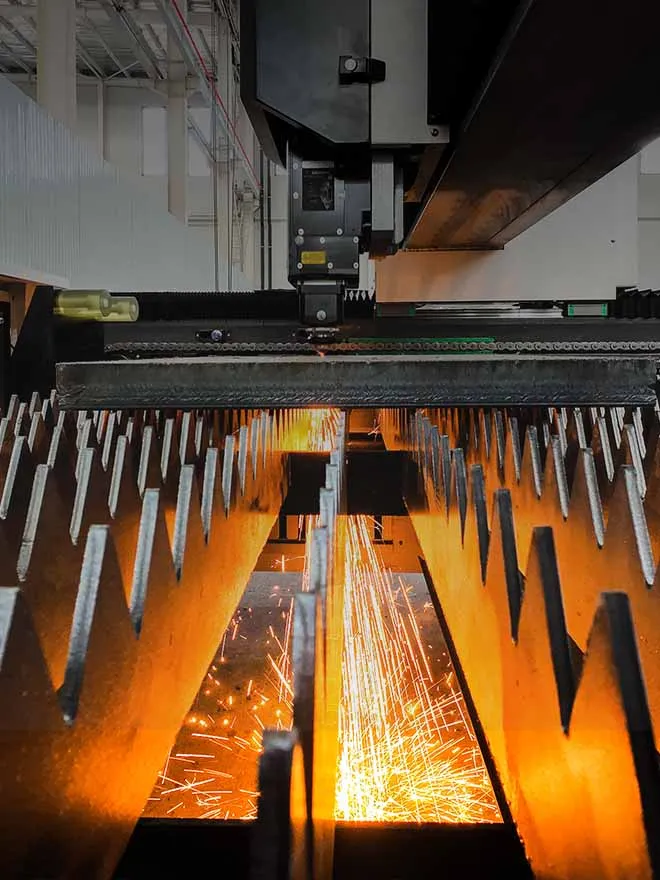
Che cos'è una macchina per il taglio laser a fibra?
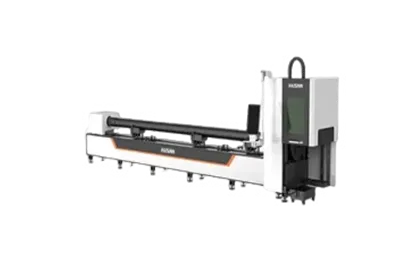
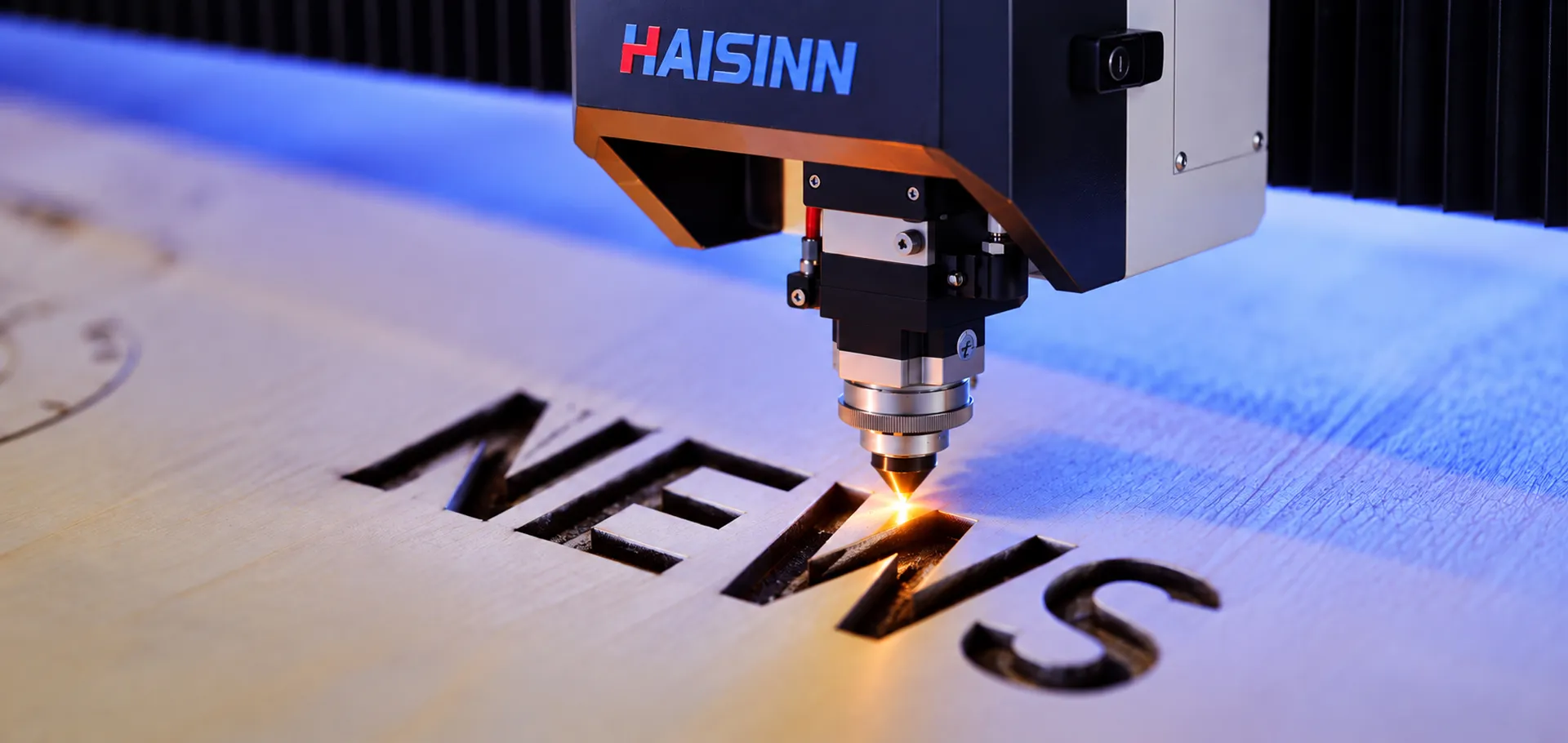
A fiber macchina da taglio laser uses a fiber-optic laser source to generate a focused beam that melts, burns, or vaporizes metal along a CNC-programmed path. Compared with CO2 or plasma systems, it delivers a narrower kerf and higher electrical efficiency, making it the standard choice for cutting sheet metal in modern fabrication shops.
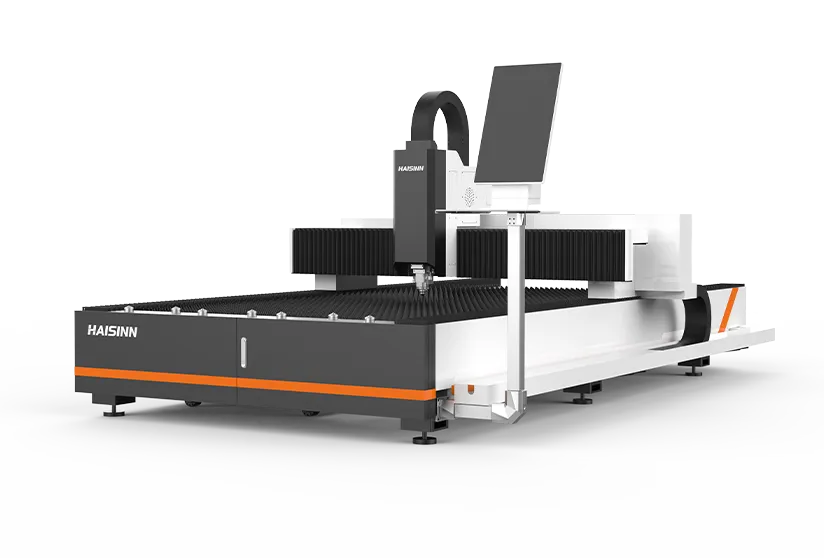
The machine is built around five working parts:
- Fiber laser generator — produces the beam using doped optical fiber rather than gas or crystal, which is why fiber lasers convert more input electricity into usable cutting power than older CO2 systems.
- Cutting head — focuses the beam through a lens and mixes it with an assist gas (oxygen, nitrogen, or air, depending on material and finish requirement).
- CNC controller and motion system — drives the gantry or beam-delivery path according to the nested cutting file.
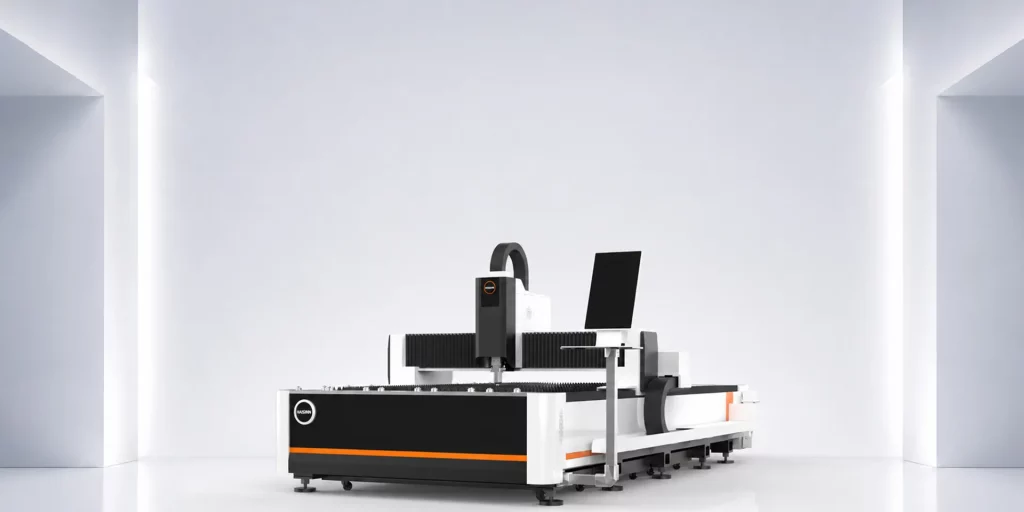
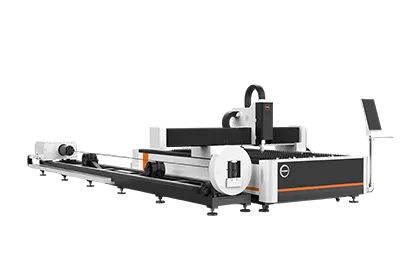
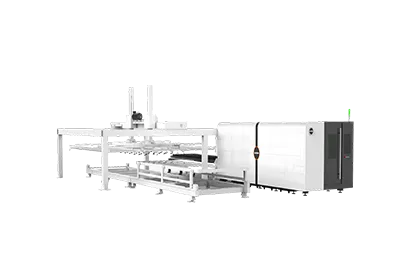
- Bed or exchange table — holds the sheet in place; single-platform and exchange-table (pallet-changer) configurations are the two most common structures.
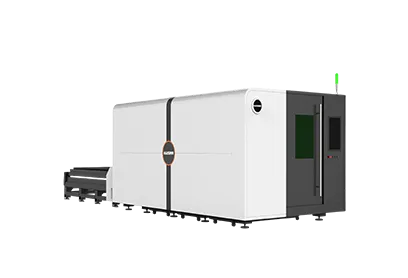
- Chiller and enclosure — manages heat and, on enclosed-cabin models, contains fume and reflected light.
Cut-edge quality on these machines — squareness, dross, striation pattern — is generally evaluated against ISO 9013:2017, the international standard for classification and geometrical tolerances of thermally cut surfaces. Meeting a particular quality class depends on the specific machine, material, thickness, and gas setup, so it shouldn’t be assumed from the equipment category alone.
Fiber Laser vs CO2 and Plasma Cutting
Buyers researching this category are usually comparing three cutting methods, not evaluating fiber laser in isolation.
Against CO2 laser cutting — the older laser technology it has largely displaced in sheet metal work — fiber laser needs no mirror alignment, tolerates reflective metals like aluminum and brass more reliably, and typically has a smaller equipment footprint for the same power class. The trade-off is that very thick carbon steel (well beyond typical sheet-metal gauges) can still favor other processes depending on the specific application.
Against plasma cutting, the comparison runs the other direction. Plasma remains cheaper to buy and can be a reasonable choice for cutting thick plate at lower capital cost. Fiber laser produces a narrower kerf, a smoother cut edge, and tighter dimensional tolerance — which matters when parts go straight to welding or assembly without secondary edge finishing. Shops that outgrow plasma’s precision ceiling, particularly on parts requiring tighter tolerances or a cleaner edge for downstream processes, are the most common upgrade candidates.
Neither comparison is absolute. The right process depends on material, thickness range, required edge quality, and production volume — not on which technology sounds newer.
Reading the Spec Sheet: Power, Speed, and Working Area
Spec sheets for this category typically list four numbers that actually determine what a machine can do. Using HAISINN’s HS-A Economical Single-Platform series as a concrete reference point:
| Specifica |
HS-A Series (As Published) |
| Potenza del laser |
1,5–40 kW |
| Area di lavoro massima |
12.200 × 2.500 mm |
| Velocità massima di taglio |
Fino a 140 m/min |
| Accelerazione massima |
Fino a 1,5 G |
| Precisione di posizionamento |
±0.05 mm/m |
| Typical Materials |
Carbon steel, stainless steel, and aluminum |
A few notes on how to actually use these numbers:
- Power sets the ceiling on material thickness and cutting speed, but it is not a direct promise of a specific maximum thickness — that depends on gas type, nozzle setup, and the cut quality you’re targeting.
- Speed is a maximum figure achieved on thin material under ideal conditions; actual throughput on thicker plate is always lower.
- Acceleration affects cycle time on parts with many small features and tight corners more than it affects straight-line cutting speed. A machine with high top speed but low acceleration can still be slow on detail-heavy nests.
- Positioning accuracy is a repeatability figure, separate from cut-edge quality, and it’s worth asking a supplier to define both terms clearly since they’re often used interchangeably in marketing copy.
Typical Applications in Metal Fabrication
Fiber laser cutting machines in this power and working-area range are used across:
- Sheet metal fabrication shops producing enclosures, brackets, and structural components
- Automotive and equipment manufacturers cutting chassis and frame parts
- HVAC and appliance production lines
- Structural steel fabricators cutting flat components before welding
The common thread across these applications isn’t the industry — it’s that the part starts as flat sheet stock and needs a clean, dimensionally accurate cut before the next production step.
Common Misconception: More Kilowatts Always Means Faster Cutting
A frequent assumption among first-time buyers is that a higher-wattage machine will simply run faster on everything. In practice, cutting speed is governed by the combination of power, material type, thickness, and assist gas — not power alone. On thin sheet, a lower-power machine can already be running at its mechanical speed limit, so adding kilowatts doesn’t shorten the cycle. The power increase pays off mainly on thicker material, where it either enables a cut that a lower-power machine can’t make cleanly or lets that same thickness run faster than it otherwise would. Buyers should size power to their actual material mix, not to the highest number on a spec sheet.
Quality Control and Certification: What to Verify Before You Buy
Manufacturing process controls affect machine reliability more than most buyers realize before their first breakdown. HAISINN states that its production process includes Incoming Quality Control (IQC), In-Process Quality Control (IPQC), and Outgoing Quality Control (OQC), along with a 72-hour burn-in period and a calibration target of up to ±0.03 mm for applicable equipment. These are company-published process claims, and the specific inspection procedure and acceptance standard for a given order should be confirmed in the quotation.
On certification: HAISINN’s website makes company-level CE and FDA compliance claims, but certificate numbers, issuing bodies, and model-specific coverage are not publicly listed. Don’t treat “the company mentions CE” as equivalent to “this specific configuration is CE certified” — ask for the declaration of conformity or test report tied to the exact machine you’re quoting, from any supplier, not just HAISINN.
Quanto costa una macchina per il taglio laser a fibra?
Il prezzo dipende dalla configurazione. Il preventivo formale viene preparato in base alla potenza laser richiesta, all'area di lavoro, ai materiali, al livello di automazione, ai componenti principali, al mercato di destinazione e all'ambito dei servizi. Due macchine con la stessa potenza nominale dichiarata possono avere prezzi molto diversi se si considerano le dimensioni del piano di lavoro, l'automazione e i marchi dei componenti: per questo motivo, un preventivo basato su configurazioni equivalenti, e non un listino prezzi pubblicato, è l'unico modo affidabile per confrontare le opzioni.
Domande frequenti
Quale spessore può tagliare una macchina per il taglio laser a fibra?
Dipende dalla potenza del laser, dal materiale e dalla qualità del bordo richiesta, anziché da un unico valore fisso. Le macchine con potenze nell'ordine di più kilowatt ampliano la gamma di spessori lavorabili nella pratica, ma lo spessore massimo esatto per un determinato livello qualitativo deve essere stabilito mediante una prova di taglio sul materiale specifico, non basandosi esclusivamente su una scheda tecnica.
Il taglio laser a fibra è migliore del taglio al plasma?
Nessuna delle due tecnologie è universalmente migliore. Il laser a fibra offre un solco di taglio più stretto, un bordo più liscio e tolleranze più ristrette; il plasma comporta un investimento iniziale inferiore e può essere adatto alla lavorazione di lamiere spesse che richiede una precisione minore. La scelta giusta dipende dai requisiti di tolleranza dei pezzi e dal volume di produzione.
Qual è la differenza tra una macchina per il taglio laser a piattaforma singola e una con tavola intercambiabile?
Una macchina a piano singolo ha un unico piano di lavoro fisso, quindi il carico e lo scarico interrompono il ciclo di taglio. Una macchina con tavola di scambio (cambio pallet) inserisce un pallet già caricato mentre il precedente è ancora in fase di taglio, riducendo i tempi di inattività nelle produzioni ad alto volume.
Come gas di assistenza devo usare azoto, ossigeno o aria?
Dipende dal materiale e dalla finitura richiesta: l'ossigeno accelera il taglio dell'acciaio al carbonio, ma lascia un bordo ossidato; l'azoto produce un bordo pulito e privo di ossidi su acciaio inossidabile e alluminio, ma comporta un costo del gas più elevato; l'aria compressa è un'opzione meno costosa per alcune combinazioni di materiali e spessori.
In che cosa si differenzia la precisione di posizionamento della macchina dalla qualità del taglio?
La precisione di posizionamento indica con quale esattezza la macchina raggiunge e ripete una coordinata programmata. La qualità del taglio — ortogonalità, bave e rugosità del bordo — è un risultato distinto, influenzato da potenza, velocità, gas e messa a fuoco, e viene generalmente valutato in riferimento a una norma come la ISO 9013:2017 anziché alle specifiche di posizionamento.














 4 settembre 2026